Beaks and Bills
by Joe Meche
Given that I’ve written 265 columns for Whatcom Watch since 2002, I might have mentioned a time or three that we have traditional spring and fall getaways over the mountains and through the woods to the east side. You might also have read that we don’t always go to the same place every time … variety being the spice of life as it were. One place in particular seems to have risen above many others since we started this business and that place is Pearrygin Lake State Park (Pearrygin), just a few miles up the road from Winthrop.
Our appreciation of Pearrygin evolved over the years as did we. All five of our grandkids had their respective introductions to our love of camping at Pearrygin and other lakes and rivers in the greater Methow Valley area. This eclectic part of the state is part of Washington’s Cascade Loop and extends from the east side of the Cascade Crest to Pateros on the Columbia River. Within this area, known as Region 6 to the creators of the loop, are numerous opportunities to please any recreational appetite you can imagine, from biking, hiking, skiing, and climbing to numerous water sports and, of course, bird-watching!
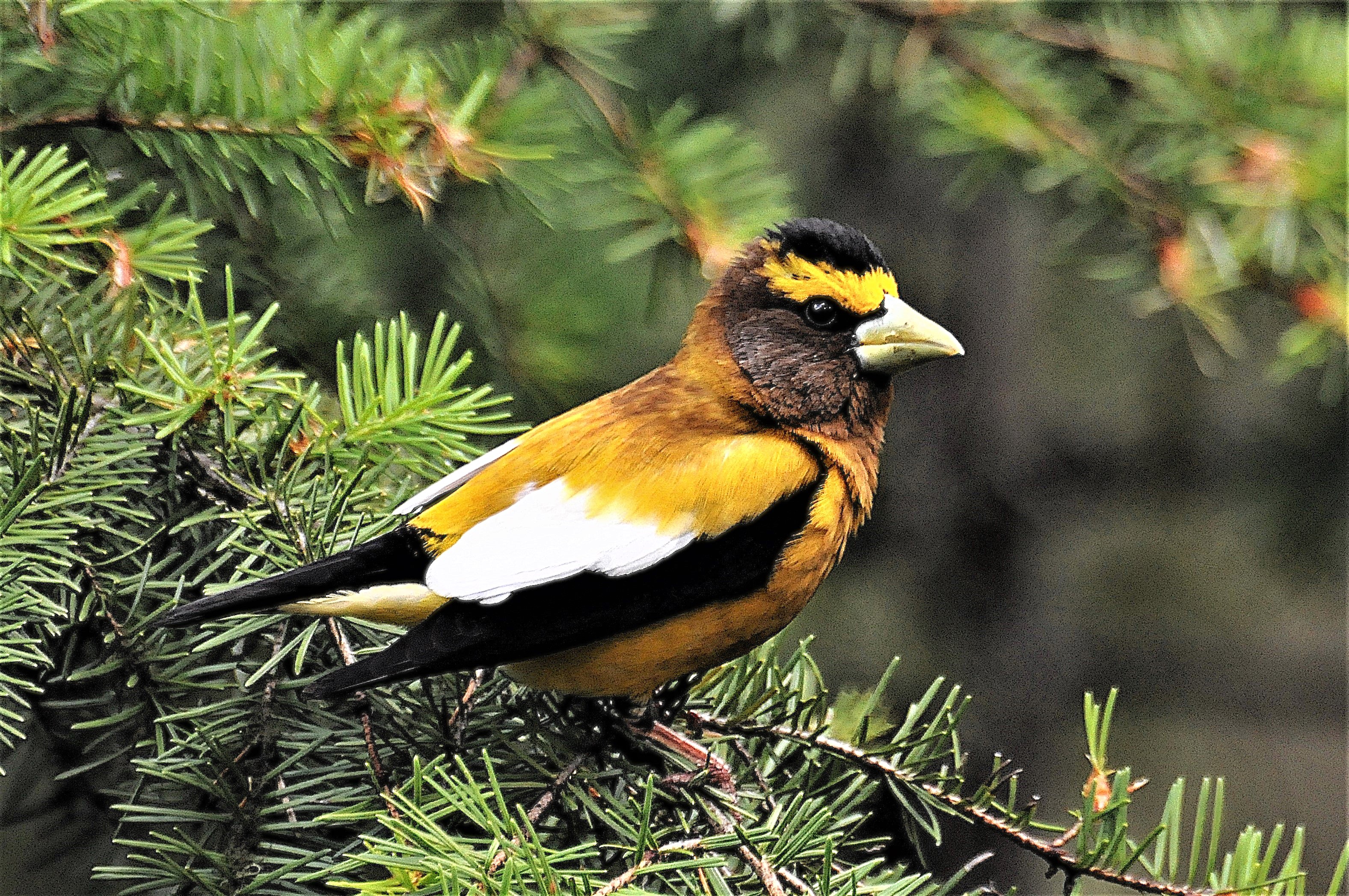
photo: Joe Meche
Evening grosbeak
Part of the charm, it seems, comes from the fact that the main access from the west side is State Highway 20, which is buried under winter snows for as much as six months of the year. You can certainly reach it other ways, but none are as scenic as the run over Washington Pass. The transition between the different ecosystems of the east and west sides of the Cascades is always striking. The dense forests of Douglas fir, western hemlock, and spruce give way to Ponderosa pines and quaking aspens with brilliant alpine larches putting on a golden show as winter approaches the higher elevations. The aptly named Early Winters Creek flows from higher elevations to meet the Methow River downstream.
The geology of the region is as fascinating and stunning as the scenery itself. The Okanogan Lobe of the Cordilleran ice sheet covered this part of what is now Washington state 300 million years ago. It was the growth and retreat of glaciers over the past 2.5 million years that shaped the entire Methow landscape that we know today. There was no valley there and it was an ocean floor until the forces of nature took over, as they often do. We have a large sheet of ice to thank for the scenic wonders we experience today.
On our spring visits after the pass has opened, we’ve camped at both Lone Fir and Klipchuck campgrounds for the higher elevation birds, like evening and pine grosbeaks and chipping sparrows. The Klipchuck campground is well known for its variety of woodpeckers including the common pileated and hairy woodpeckers and the less common Williamson’s sapsucker. One particular part of this campground is known as the woodpecker corner for obvious reasons. In addition to birds, Klipchuck is a veritable highway for deer as they move into the higher elevations in spring. At dinner one evening, we counted 36 deer passing through just 50 feet away from our campsite. Our granddaughter loved it.
Farther downstream, Early Winters Creek joins forces with the Methow above Mazama, the gateway to Hart’s Pass. The road to the pass is rigorous at times and should never be attempted in a vehicle without sufficient clearance. A couple of corners on the 24-mile mountain road are breathtaking, but the end result is always worth the journey … though I doubt I’ll ever do it again. After passing through the remnants of an old wildfire, you get to Slate Peak on the boundary of Whatcom and Okanogan counties. This peak is listed as the highest maintained road in the state. The upper parking lot below the summit sits at 7,488 feet. On one trip, the horizontal sleet at the peak shortened our stay, and, the morning after we drove to the summit, our tent was covered with snow. Such is the capricious nature of mountain weather.
After an always scenic drive and a much-anticipated arrival in Winthrop, we usually stop for the prerequisite leg-stretching and sometimes a bit of refreshment. Winthrop, is a great place to pick up things you forgot to load in all the excitement to get on the road. Depending on whether we’re camping upstream on the Chewuch River or at Pearrygin, the routine seems to work for us. The plan changes a little, however, if our destination is Alta Lake State Park, near the mouth of the Methow. Alta Lake (Alta) connects the dots from the top of the Methow Valley to the very bottom near the town of Pateros.
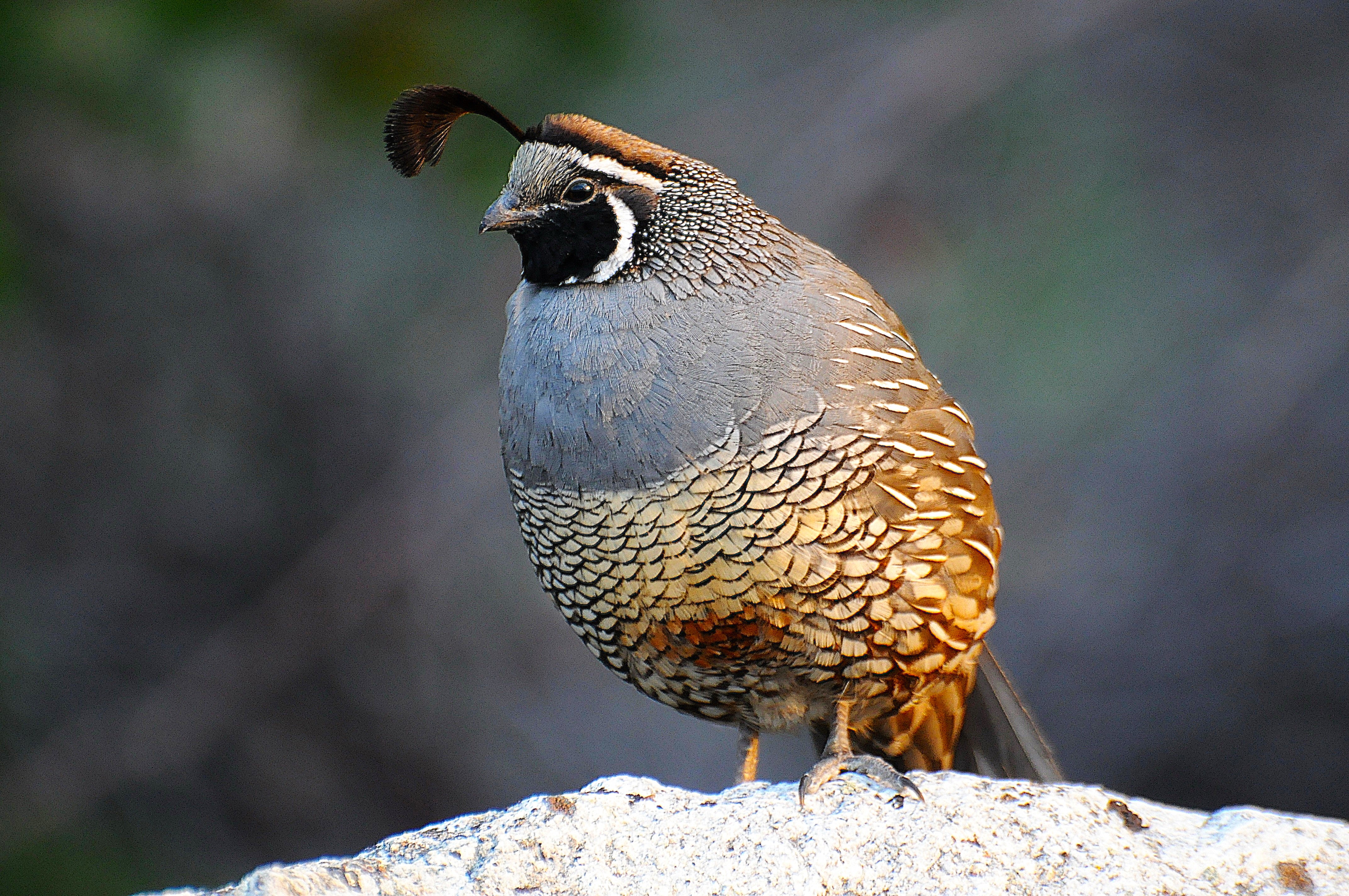
photo: Joe Meche
California quail
Every one of our grandkids has fond memories of Alta, as do their grandparents. Th e trips with the grandkids were usually later in the year and much hotter. Needless to say, the lake itself was the logical place to beat the heat. For the birding grandpa who awakened before everyone else, morning was the ideal time for birds. I had occasion to hike a thousand feet or more above our campsite before the weather warmed to find California quail and search for common nighthawks and poorwills. I usually strolled into our campsite while Cindy was busy feeding breakfast to the troops.
The most exciting trip to Alta was when the Carlton Complex fire leaped across the Methow and forced the entire campground into Level Three evacuation. The afternoon sky darkened ominously as we made quick work of dismantling the campsite and gathering gear along with grandkids to head to Wenatchee for the night! The two young campers in tow loved the indoor pool at the motel, and the transition from sleeping on the ground to having A/C and clean sheets was tolerated by all.
But it all goes back to Pearrygin, which we consider as our base camp to explore this special part of Washington. When we head for Pearrygin, we take kayaks and bikes to complement our activities, knowing that just hanging out around the campground is considered an activity as well. On our most recent trip, we actually enjoyed one night and a full day of rain. Th is change in the weather was a perfect opportunity to drive to the great health food store in Twisp before returning to Winthrop for stops at our favorite bookstore and restaurant. After a mellow, rainy day, we headed back to our home away from home.
As much as we enjoy our own time-tested tradition on the east side, we like to share and encourage everyone to consider this scenic three-hour drive to sample one of Washington’s unique corners.
As I write this column in mid-October, I think about the crisp morning air and the grandeur of the larches at Washington Pass. I won’t let my mind stray too far east, however, because we’ll soon head southwest for a late October trip to Cape Disappointment with hopes of big surf on the cliff s below the lighthouse. Even though I’m well into my golden years at 83, I know there’s still so much to see and do … so stay tuned!
__________________________
Joe Meche is a past president of the North Cascades Audubon Society and was a member of the board of directors for 20 years. He has been watching birds for more than 70 years and photographing birds and landscapes for more than 50 years. He has written over 250 columns for Whatcom Watch.