by Calvin Lowe
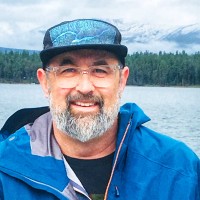
Jon-Paul Shannahan
Salmon recovery, water quality and flood management are among the environmental challenges facing Whatcom County. Addressing them requires scientists, engineers, government agencies and funding. Jon-Paul Shannahan, Whatcom County’s environmental programs manager, helps oversee efforts to address these challenges through the county’s Public Works Department.
Shannahan supervises a team of scientists, planners and engineers working on projects involving salmon recovery, fish passage and water quality monitoring. These programs aim to protect natural resources that are closely connected to the lives of Whatcom County residents. Among the county’s ongoing efforts are projects to restore salmon habitat, protect shellfish growing areas, and improve the ability of wetlands to store water and reduce flooding.
Much of this work depends on funding from outside sources, creating challenges for the longterm sustainability of the county’s environmental programs.
Nooksack Riparian Resilience Program
“Right now, the county is reliant on outside grants for a lot of these core services,” Shannahan said. One of the projects Shannahan is particularly enthusiastic about is the Nooksack Riparian Resilience Program.
The program is a pilot project funded through a Washington State Department of Ecology Streamflow Restoration grant. It explores ways to encourage restoration work on agricultural land, including planting vegetation along rivers and streams. The effort involves a partnership between Whatcom County Public Works, Planning and Development Services and the Conservation Futures Fund. The participating organizations are exploring ways to compensate or otherwise provide incentives for restoration work that supports salmon recovery and watershed cleanup goals.
“We are looking to explore incentive programs for working in agricultural lands to do riparian planting or restoration work,” Shannahan said.
The project represents an effort to encourage environmental restoration through cooperation with agricultural landowners rather than relying solely on regulatory requirements. “Hopefully, we can get three-to-five pilot projects done to prove the concept and generate publicity and information about the program that we might be able to roll it into a kind of a permanent program,” Shannahan said. The potential expansion of the program would provide another avenue for pursuing the county’s environmental restoration goals.
Partnership With Nooksack Tribe
Another project involves a partnership with the Nooksack Indian Tribe to conduct streamflow restoration work in the South Fork Nooksack River watershed. The work includes stream, wetland and wildlife restoration at locations such as Fish Camp and Black Slough.
According to Shannahan, the projects aim to improve salmonid habitat and wetland conditions while increasing water storage. Improving the ability of wetlands to retain water could help reduce flooding and alleviate low streamflows during the summer, when water availability can become a concern. The county is also engaged in broader planning efforts involving the Nooksack River and flooding, including potential work around the Everson-Nooksack bypass area and locations farther downstream.
Together, these efforts illustrate the range of environmental issues managed through Public Works, from restoring habitat to addressing water-related challenges. Though Whatcom County has several environmental projects underway, securing funding remains a significant challenge.
Many of the county’s environmental programs depend on grants from outside sources. For Shannahan, establishing a dedicated local funding source for these programs is one of the most important changes the county could make.
“If I could do one thing, it would be to set up some sort of a grant or some sort of financial system to support these programs locally,” Shannahan said.
County’s Budget Difficulties
The county’s budget difficulties have also created pressure to reconsider how existing programs operate. Shannahan said his department is examining ways to adjust its programs to available staffing and funding levels. Rather than viewing those limitations exclusively as setbacks, he sees opportunities to develop new partnerships and reconsider existing approaches.
“As we go through this budget crisis, it’s a great opportunity to figure out new partnerships and collaborations and kind of fine-tune what we’re doing,” Shannahan said. Cooperation is particularly important because environmental problems rarely have straightforward solutions.
“These issues are big, they’re complex, and there’s no one easy solution,” Shannahan said. “They often require collaboration.”
Working with other agencies, organizations and individuals can help address challenges that extend beyond the responsibilities or capabilities of any single department. Shannahan also emphasizes the importance of maintaining professional relationships when disagreements arise. Having connections with people across different fields, he said, can make it easier to resolve conflicts and work toward solutions.
Shannahan’s interest in the environment began long before he entered the field professionally.
Shannahan’s Background
Growing up in Wisconsin, Shannahan didn’t spend much of his childhood playing with toys or visiting parks. Instead, he explored ditches, built makeshift dams and played with crayfish. His family eventually moved to an 18-acre property, where they grew a garden, maintained an orchard, and obtained some of their food through hunting and fishing. He remembers foraging for mushrooms and harvesting asparagus.
“This is actually how we could survive and sustain,” Shannahan recalled thinking. “It’s not about going to the grocery store. You could do it this way.” Those experiences helped Shannahan develop an understanding of the natural world and the resources it could provide.
His father, a heart surgeon, also played an important role in developing his interest in biology. The two would go hunting and fishing together. When they caught a fish, Shannahan’s father would dissect it, examine its teeth and investigate what it had been eating.
“It really just kind of opened my eyes,” Shannahan said. “You can easily just look at it and say, ‘It’s a fish,’ but then you have someone — your mentor, your leader, your dad — saying, ‘Take a look at this. Are you curious about this? What’s in here?’”
Another early influence was a neighbor who worked in wildlife enforcement for the Wisconsin Department of Natural Resources. The neighbor was involved in various research projects and occasionally brought equipment home, including a bear trap.
Shannahan remembers being fascinated by the work and realizing that studying and protecting natural resources could be a profession. “I had no idea that people did this for a living,” Shannahan said.
Education and Experience
Shannahan eventually earned undergraduate degrees in environmental science and zoology, developing particular interests in fisheries and lake management. He also pursued studies in limnology, the study of inland waters, but left the program to accept a paid position.
Later in his career, he considered pursuing environmental law and enrolled in a master’s program focused on water and environmental law. He ultimately decided not to continue the program. His education and professional experience provided a foundation for a career spanning approximately 30 years in environmental and natural resources work.
Shannahan moved to Bellingham in 1999 after college, hoping to establish roots and work on environmental issues facing Whatcom County. That same year, Chinook salmon were listed under the federal Endangered Species Act. Shannahan said an adviser recognized an opportunity for him to apply his scientific training to natural resource issues in the region.
His career eventually took him to Michigan, where he worked for two years before hearing about an opening with Whatcom County Public Works. The position combined work on capital projects for fish passage with managing several environmental programs.
Shannahan believed his experience and skills made him a good fit for the position. He applied, and, at the time of the interview, had been serving as environmental programs manager for approximately one year.
Science and Human Connections
For people interested in entering environmental work, Shannahan recommends building a strong foundation in science while developing skills beyond their primary area of study. He encourages students to explore subjects such as statistics, geographic information systems and communications, which can help them apply scientific knowledge to public policy and community issues.
However, he believes technical knowledge alone is not enough.
“My biggest advice for anyone going into this field or into any career is to be open to making human connections,” Shannahan said. “It’s less and less what you know, and it’s more and more who you know.”
He recently offered similar advice while speaking to AP biology students at a high school. Shannahan encouraged them to talk with adults about their careers — even suggesting they engage with their parents’ friends at dinner parties and ask where they work and how they found their jobs.
A conversation can lead to an introduction, which can open the door to a job or a new area of study, Shannahan said. For Shannahan, those relationships are particularly important in environmental work because disagreements cannot always be resolved by pointing to science.
It is an approach that brings Shannahan’s career back to the curiosity that first drew him to the natural world as a child: understanding how individual pieces fit together, whether examining a fish with his father or bringing scientists, government agencies and community members together to address the environmental challenges facing Whatcom County.
“If you meet a lot of people and know people, it’s easier to work and resolve conflict,” Shannahan said.
____________________________
Calvin Lowe is a recent graduate of Western Washington University, where he earned a bachelor’s degree in Journalism News/Editorial and Political Science. He is a multi-instrumentalist and a gamer. His favorite instrument is the guitar, and his favorite console is the Nintendo Switch.