Beaks and Bills
by Joe Meche
I don’t know if I had a period of prescience or just sheer luck, but we decided to forego a trip to eastern Washington this year and opted for the coast instead. I made all reservations early, as I usually do, so we were all set for our annual spring getaway. As fate would have it, a rock slide on the North Cascades Highway 20 forced a total closure of the west-east connector in mid-March. Estimates to reopen the highway were for late June, at best. To get around that obstacle, we would have been forced to take our least favorite cross-state highway to the other side, US Highway 2. Sorry, but this route has none of the appeal of Highway 20.
Without going into my usual rant about traveling Interstate 5 through the chaos of the Puget Trough, I’ll just say that we made it through with minor delays and found ourselves west of Olympia and heading for saltwater in good time. The great weather we experienced on Day One stayed with us the entire week and there was just enough of a breeze to keep the mosquitoes down where they belong.
Our destination for the first three nights was the Twin Harbors State Park, south of Westport. Though we had camped there before, this was to be our first-ever experience with a yurt. For the uninitiated, a yurt is a circular and semi-permanent shelter used by nomadic herders in Central Asia. We hadn’t planned to do any herding, but a yurt seemed to fit the overall theme of our trip. Twin Harbors has two yurts, and, as I was checking for campsites in general, I decided it was time to give in to one of these unique shelters. As the planning evolved, we decided that we would camp in the relative luxury of a yurt, a cabin, and a hotel room for a change. It’s amazing how your needs change as you get older.
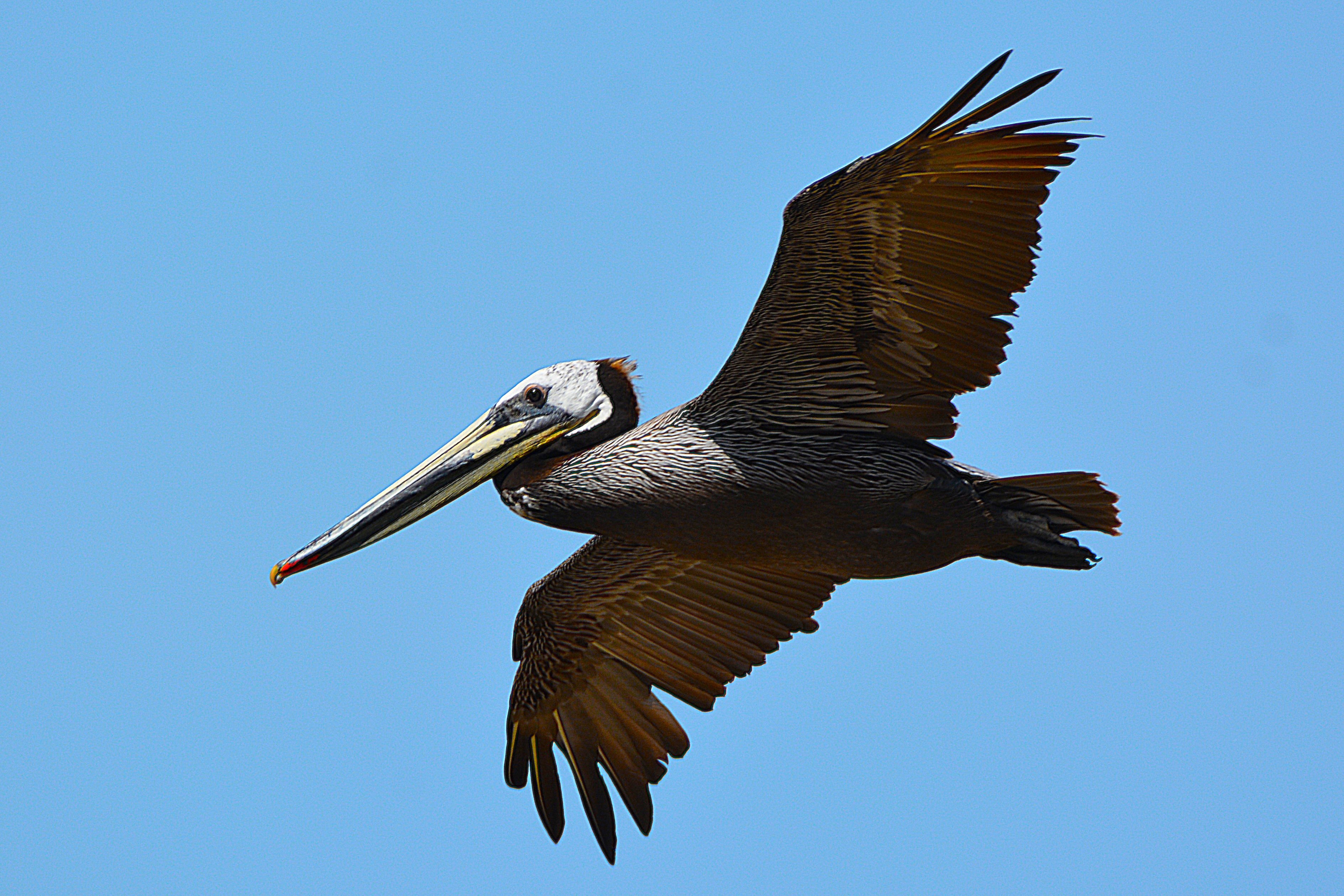
photo: Joe Meche
Brown pelican
The overall plan for the time at Twin Harbors was to explore the usual birding hotspots like the Westport marina, the Tokeland marina, and Bottle Beach State Park. Though we were a bit late for the prime movements of shorebirds, we did enjoy the birds that were there. On our first drive into Westport for dinner on Day One, we were taken aback to find more than 300 brown pelicans huddled together on the main breakwater of the harbor. Brown pelicans, as it turned out, proved to be the most numerous birds that we saw for the first three days. Since they’re the state bird of my home state, I was okay with that.
We took a drive south on Day Two to visit the small community of Tokeland on the north side of Willapa Bay. The marina is always a birding hotspot if the season and the tides are right. Can’t begin to tell you how exciting it was to sit for four hours and wait for the tide come in. It was still enjoyable and we had to get back to the yurt since we had company coming for dinner. Two long-time friends from Bellingham now live just down the road in Grayland so it was a great opportunity to reconnect.
Day Three was typical for us as far as trip routines go. We stayed closer to the yurt to pack and plan for the next day while exploring a couple of new places for Cindy. After breakfast and a stroll around Westport, we headed to the often dramatic Westport Light State Park. Anyone who knows the area can tell you that this is one of Washington’s best beaches for surfing. Surfing didn’t fit into our plans, but we enjoyed watching nearly 100 brown pelicans and a few Bonaparte’s gulls diving for fish right off the South Jetty. This and the North Jetty protect and frame the opening into Grays Harbor from the Pacific Ocean.
On Day Four, we headed north on the fabled Highway 101 toward the small but busy fishing community of Neah Bay. Unlike the Oregon Coast, Washington’s share of Highway 101 stays inland with only occasional, teasing views of the ocean at Kalaloch and other hike-in beaches. Nonetheless, the drive was pleasant and we first reached Clallam Bay and Sekiu on a scenic and winding road along the Strait of Juan de Fuca. Neah Bay came into view from one of the many pullouts that offered superb views across the strait to Vancouver Island.
In Neah Bay, we continued our glamping getaway and checked into one of the cabins at the Cape Resort. These cabins are neat and tidy and very well designed with the wonders of indoor bath facilities! Once again, we golden-agers enjoy indoor plumbing … home and away. We often reminisce about all the trips we’ve taken in the past 34 years and reflect on the variety of accommodations from 2-person tents to yurts and cabins. Memory Lane is a place we visit fondly on a regular basis when we’re on the road.
One of the trip highlights was my third and Cindy’s first visit to Cape Flattery, the northwestern most point of the land in the contiguous United States. From the parking lot at the end of Cape Flattery Road (makes sense,) it’s a 1.5-mile hike to viewpoints at one of Washington state’s most dramatic places. Depending on the time of year and the tides, you have either smashing waves or relatively calm waters but the views are nothing short of spectacular. Earlier in the year, marine birds including gulls, cormorants, and even black oystercatchers nest on the surrounding cliff s and add to the overall excitement that is palpable to say the least. The view across to the Tatoosh Island lighthouse conjures long-held dreams of living in a lighthouse for a full year. The fact that this island is a major nesting site for thousands of common murres would certainly add to the drama.
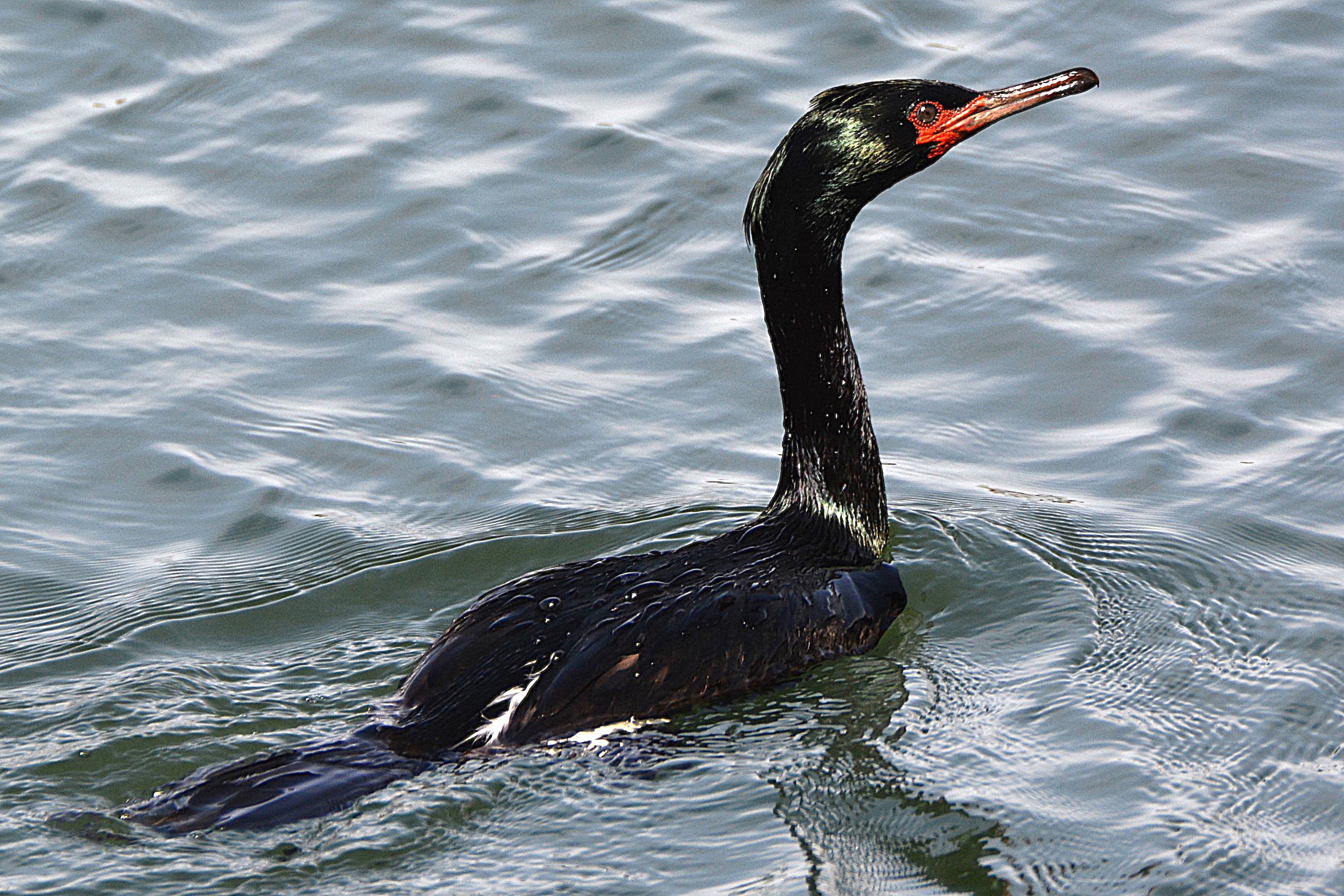
photo: Joe Meche
Pelagic cormorant
Before heading back to Neah Bay, we stopped to visit one of the state’s finest beaches … Hobuck Beach. I spent a couple of days there a few years ago and knew that Cindy had to see it. What makes it so perfect is the fine semicircular, sandy beach that extends from a point just south of Cape Flattery to neighboring Shi Shi Beach. With the off shore sea stacks, it’s truly one of our finest beaches for beachcombing. This beach has some of the best sand dollars I’ve ever seen on any coast.
On our return to Neah Bay, we stumbled onto another common sighting for the residents but fantastic for us. Scores of bald eagles were just hanging out around the marina, perched in nearby trees or on ships’ masts, and on the sandy beach and marina breakwater. To accompany the visuals of the eagles was the barking of numerous California sea lions. The birds and marine mammals are there primarily for the castoff parts of fish brought in by the sport fishers. We like Neah Bay!
We left our cozy cabin and the eagles the following day to head for Port Townsend for one more night on the road. We had to make one more stop, however, in Seiku, another small but vibrant fishing community on the strait. One look at all the empty boat trailers told the story … salmon fishing is serious business along Washington’s northern coast. Low tide also presented yet another beach that needed combing. Despite the remoteness of this part of the state, it’s always worth the drive and certainly far from the madding crowds.
With no need or desire to stop in Port Angeles or Sequim, we continued on to Port Townsend (PT), our favorite waterfront town of all. Having visited PT on numerous occasions, we knew where we wanted to go and what we wanted to do. After a wonderful Thai dinner at the Banana Leaf, we nestled into our waterfront room at the historic Tides Inn, the same PT hotel that was featured in the movie “An Officer and a Gentleman.”
With a full day ahead before our afternoon ferry, we enjoyed a favorite breakfast stop and prowled the streets for our favorite bookstores, etc. The big surprise for us came when we ventured uptown for the first time. Just when you think PT couldn’t offer anything more, it did. We had always stayed close to Water Street and the waterfront, but the Saturday Farmers’ Market swept us away. The overall vibe surpassed anything I’ve felt in Bellingham’s version. The food and the music as well as the location were extremely relaxing and buoyant, to say the least. Next time we’ll make sure to visit uptown PT.
The afternoon ferry to Keystone was smooth, though a bit windy on the outer deck where I always perch for bird photos when crossing Admiralty Inlet. I might off er a hats off to the state’s ferry system … it’s a very efficient hassle-free way to connect the dots, should island hopping be on your itinerary. This was all part of the plan to return home the back way and avoid the main highways. If you read “Blue Highways,” you might understand my love for back roads. Just to fill in the blanks, the Deception Pass campground and beaches were packed for the weekend so we kept rolling. And once again, after all is said and done, there’s no place we’d rather be than … home!
_________________________________
Joe Meche is a past president of the North Cascades Audubon Society and was a member of the board of directors for 20 years. He has been watching birds for more than 70 years and photographing birds and landscapes for more than 50 years. He has written over 250 columns for Whatcom Watch.