Beaks and Bills
by Joe Meche
Don’t look now, but we are very close to the first day of spring and I can feel it in the air. Perhaps it’s all part of the seasonal drudgery we often feel from one winter to the next. For the very first time in more than five decades in Bellingham, we have mused over the concept that drives snowbirds to warmer climates for half the year. By the time you read this, we will have returned from our trip to the Big Island and the memories will still be firmly etched. I hope to have fodder enough for the next couple of issues of Whatcom Watch so please stay tuned.
Getting away from thoughts of warmer places and back into the reality of life in our beloved Pacific Northwest is easy enough to do. I was at Semiahmoo doing my three-site effort for the Puget Sound Seabird Survey in conditions more suited for waterfowl than for humans trying to identify and count them. If you know the Semiahmoo Spit, you know that it juts out into the expanse of Semiahmoo Bay and is always susceptible to wind …from any direction. Between the rain and the 18-mile-per-hour wind, it was on the blustery side of brutal. I always take extra layers to Semiahmoo, no matter the time of year.
As much as it concerns me, I once again have to report on the lower than usual overall numbers of birds in my areas of responsibility. This, of course, is one of the reasons these surveys are conducted. And, it’s not just at Semiahmoo, but equally noticeable even in the open spaces between Bellingham and Blaine. I usually take the back roads because birding along the Interstate at 70 miles per hour is not conducive to birding … it’s only conducive to going faster from point A to point B.
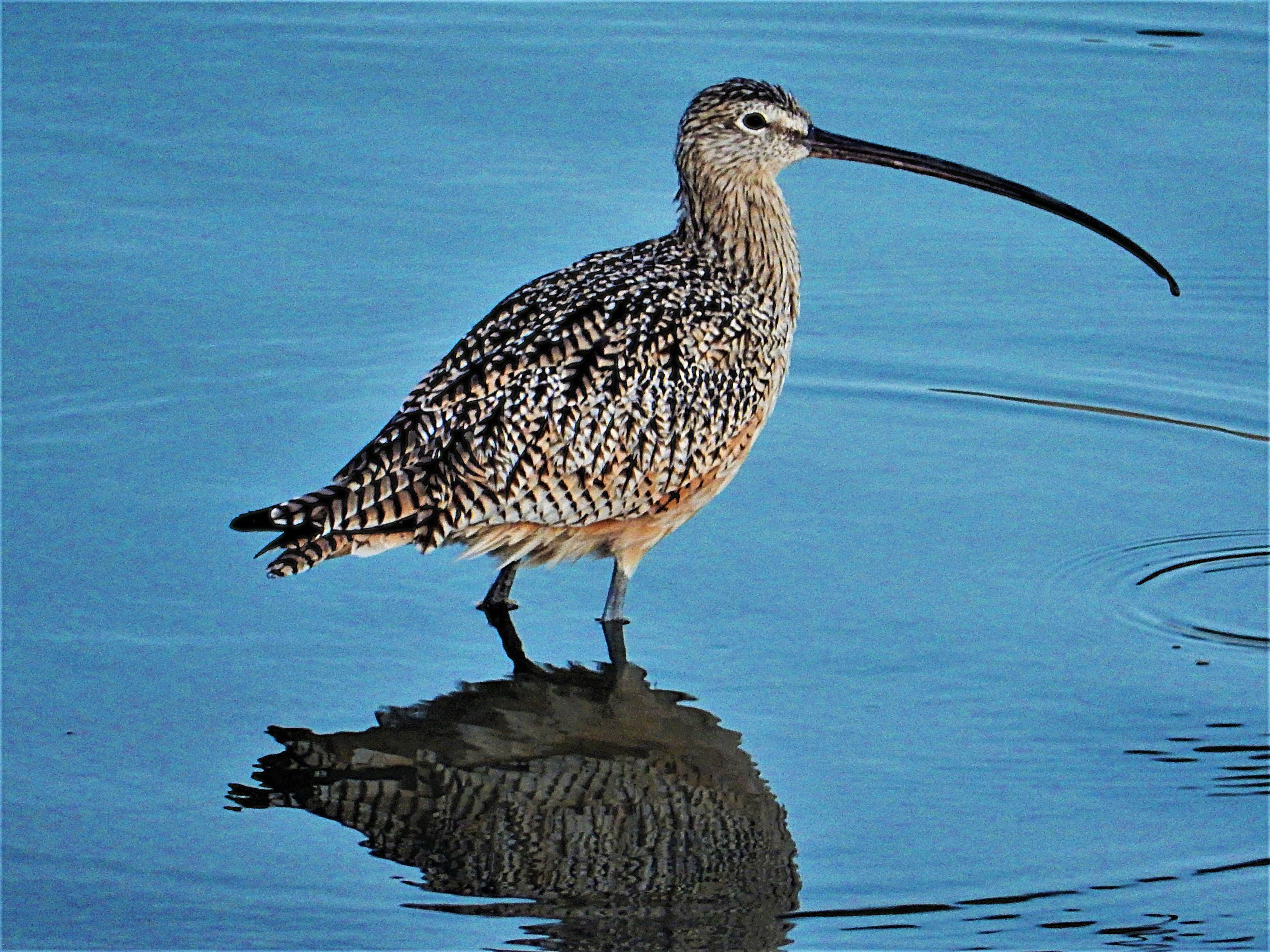
photo: Joe Meche
Long-billed curlew
The historic flocks of northern pintails and American wigeons have practically disappeared from the shoreline habitats along the south side of Drayton Harbor in the past few years. These dabbling ducks are now outnumbered by the diving species that frequent the deeper parts of Drayton. The seemingly uncountable numbers of dunlin are not as noticeable as they have been. The proven indicators of the health of the shorebird flocks were the peregrine falcons that often perched on the old water tower at Tongue Point. I have yet to see a single falcon this year resting between feeding runs.
It’s not all doom and gloom, however, but perhaps a sign that the birds must be someplace else. The prime motivations for all birds are shelter and the availability of reliable food sources. Those key elements have been very well documented over the past few weeks from our home on South Hill. Every morning, like clockwork, hundreds of doublecrested and pelagic cormorants covered the water in pursuit of the large schools of small prey fish that move into the north part of the Bellingham Bay. The fish moved in toward Squalicum Harbor and then circled counter-clockwise before heading back toward Fairhaven. What we saw from our vantage point are dark masses of cormorants following their prey in a typical feeding frenzy. Flocks of scoters and goldeneyes are also present on the bay, though not as numerous as in previous years.
On a different hand, these are good signs for the health of the bay itself. Another promising sign is the early return of great blue herons checking into the nesting area behind the wastewater treatment plant on Southside. Traditionally, early spring is the time when the herons first appear to check out and even claim the best spots to nest. As the number of birds in the colony increases, there’s almost an imperative to reconnoiter the area earlier than later. By late April and May, make a plan to visit the colony to witness the spectacle as these large birds continue the process of raising the young of the year. Hats are off to the City of Bellingham for purchasing this valuable piece of heron-friendly real estate.
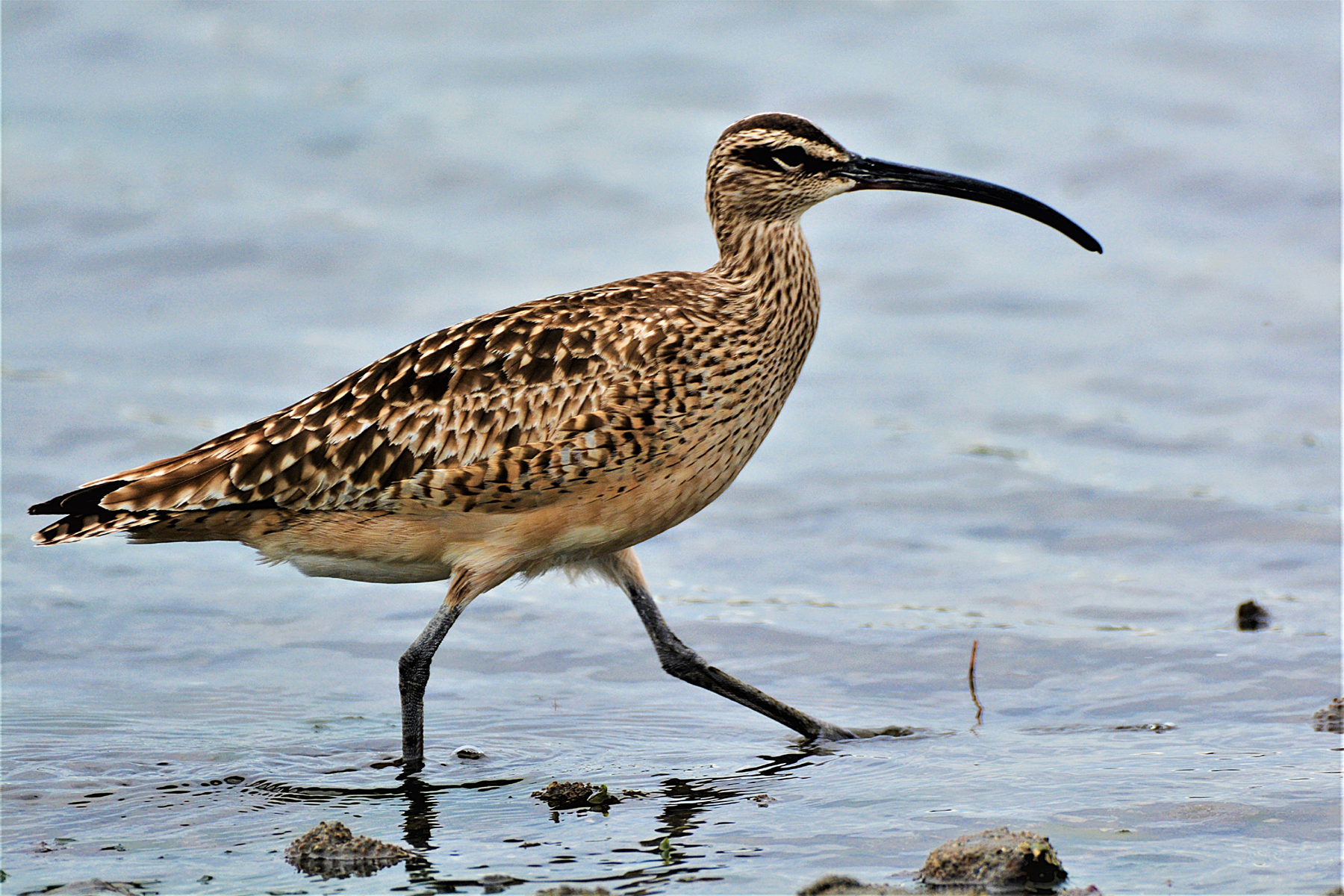
photo: Joe Meche
Whimbrel
Since we’re still in a late winter birding mode, it might be good to note that the yellowbilled loon is showing up with some regularity at Tongue Point and across the channel around the Jorgensen Pier. Other notable sightings are a longbilled curlew and whimbrels that frequent the mudflats on the east side of Drayton Harbor. Several of the bald eagle nests in the immediate area are also showing typical springtime nesting activity.
While all of the late winter/early spring pieces are falling into place, it’s time to embrace the seasonal change. Pack a lunch and your favorite hot beverage and get out to the open spaces and agricultural fields that are filled with wintering swans and snow geese. From Sumas on the Canadian border to venues in Skagit and Snohomish counties, these large waterfowl species will get to a point in mid-March when they feel the instinctual urge to head north to their breeding grounds. The sight and sounds of thousands of snow geese taking to the air at once is forever nostalgic to me. Savor the experience while they’re here because one day we’ll wake up and they will all be gone … for six months! All of the places we enjoyed them during the winter will become eerily quiet.
In the meantime, stay busy and get outside the cabin as much as you can. Never take for granted the ability to get out and enjoy the wide variety of birds and nature around us. Until we meet again, I thank you for your patronage and bid you all a fond ALOHA!!
___________________________________
Joe Meche is a past president of the North Cascades Audubon Society and was a member of the board of directors for 20 years. He has been watching birds for more than 70 years and photographing birds and landscapes for more than 50 years. He has written over 250 columns for Whatcom Watch.