A reflection on the Lummi Island Quarry over 10 years after its purchase by the Lummi Island Heritage Trust
by Tori Lehman
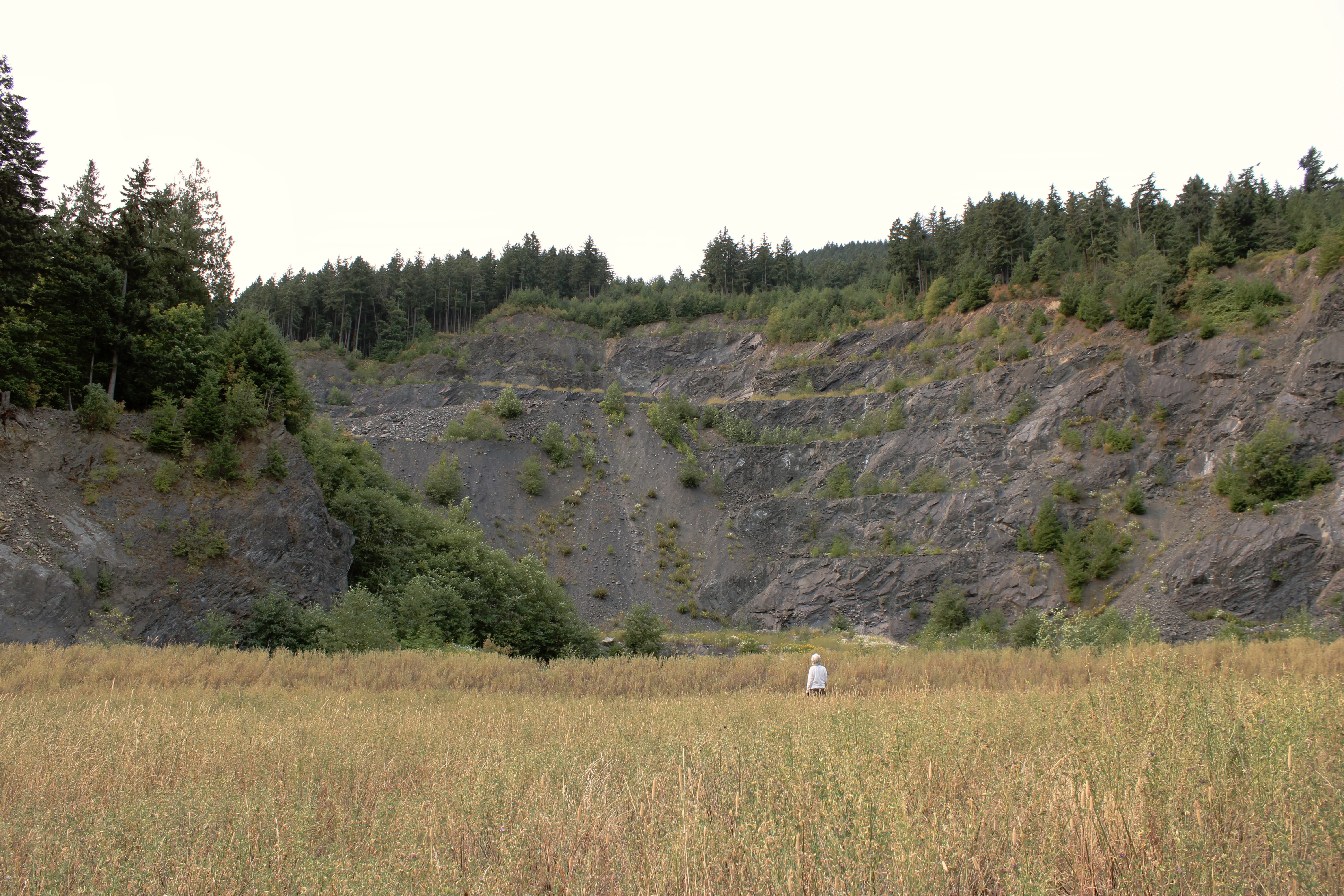
photo: Tori Lehman
Meredith Moench stands in the field of Aiston Preserve, looking up at the remnants of the quarry on Lummi Island, Wash., on Aug. 4, 2026.
Only the chatter of chickadees follows Meredith Moench’s footsteps as she traverses through Aiston Preserve. Located on the southeast side of Lummi Island, the preserve hasn’t always been this quiet. For decades, the preserve was a quarry — evident in the towering wall of limestone and shale that vegetation has only just begun to reclaim.
For years, Lummi Island residents had voiced complaints about the quarry as it expanded from occasional operations for local driveway gravel to extensive environmental damage destined for King County construction projects. Their efforts felt futile, until community members banned together and spread the word.
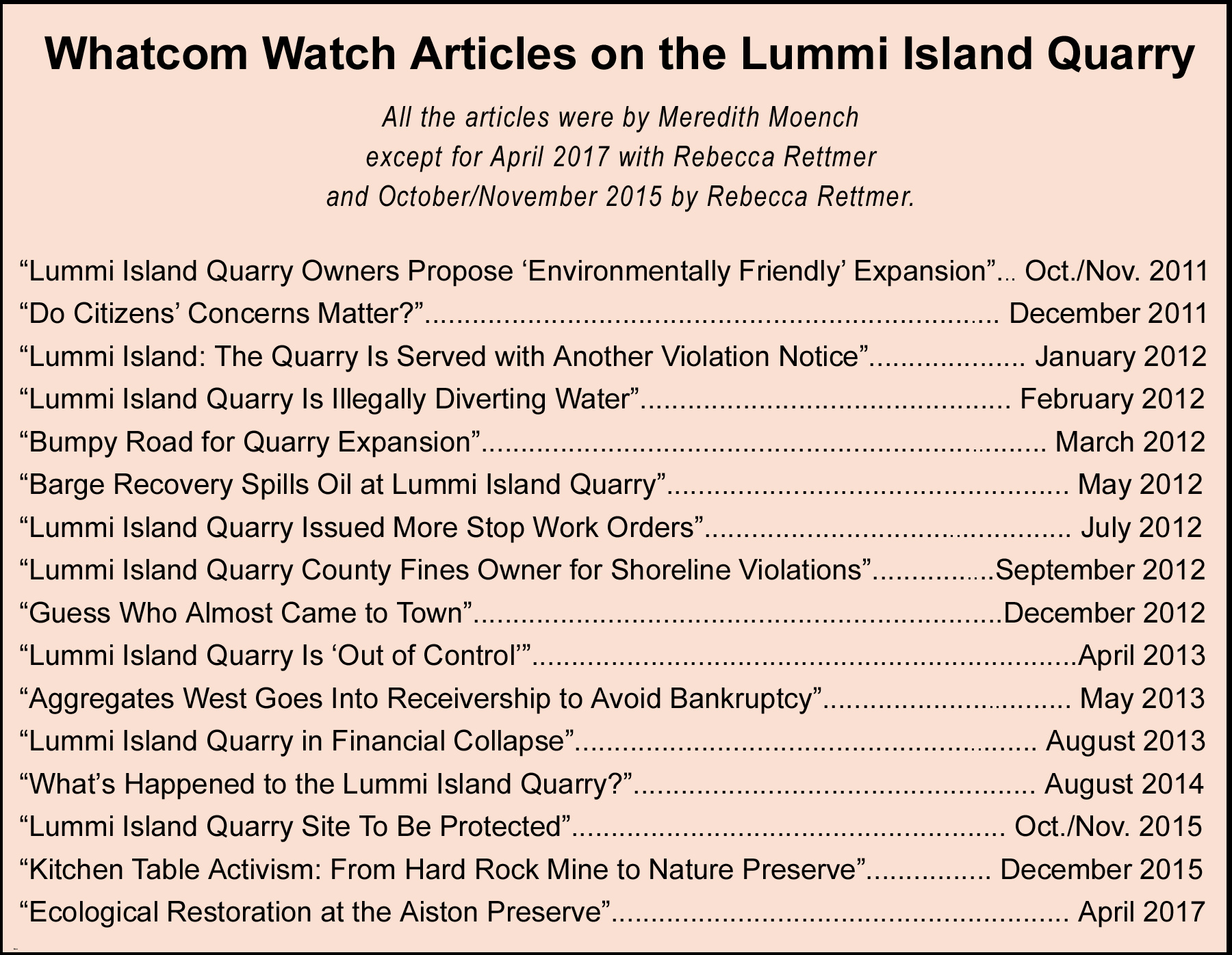
“I wanted to write something about this and bring it to the greater attention of the public, but nobody was interested. Except for Whatcom Watch,” Moench, a neighbor of the quarry, said. “Those articles made all the difference, so many people just didn’t know about it.” Moench’s first Whatcom Watch article raising awareness about the quarry’s attempt to further expand was published in 2011. By 2015, the Lummi Island Heritage Trust’s, a local nonprofit, purchased the quarry.
Now, Aiston Preserve stands proud and peaceful as a testament to the power of grassroots activism from neighbors, volunteers, pro bono lawyers, and countless others involved in the preserve’s perseverance. “There were these serendipitous connections between dozens of people,” Moench said. “You take out any one of those pieces and I don’t think it would have worked out the way it did.”
The Booming Beginning of the End
The land that became Aiston Preserve had been used as a mining quarry in some capacity since 1933. After a short hiatus, small-scale mining began intermittently between the late 1960s and mid-1990s. During this time, development on Lummi Island continued to grow and more residential homes were constructed near the quarry. Moench’s was one of them.
In 1997, in compliance with the recently passed Growth Management Act, Whatcom County created a mineral resources lands (MRL) designation on the property, which is given to land seen as economically viable for resource extraction. The MRL confined the quarry to 20 acres.
Ace Rock LLC, which had ownership of the land and began expanding operations in 1999, and Aggregates West Inc., became operating partners and formed Lummi Rock LLC in 2005. By 2007, Lummi Rock was permitted by the county to mine the remaining 9.5 acres of the 20 acre MRL.
As Lummi Rock expanded their operations, Moench and her neighbors became suspicious. Explosions would rumble their houses day in and day out as loud drilling echoed in the air and dust coated anything left unattended outside. Moench reasoned that if environmental safety precautions were being followed correctly, the fallout on neighboring communities would not have been that severe.
“One of the explosions was so loud, I thought it sounded like warfare. I knew they had to have done something wrong,” Moench said. “I wished I could have somehow warned the snakes and little animals in the ground about the dynamite, so they could run and hide.”
freepik.com
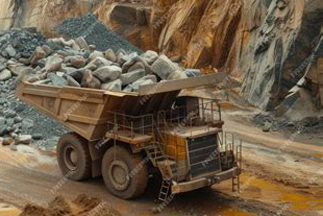
Large quarry dump truck in mining quarry
Only three years later, in 2010, Lummi Rock applied to expand the MRL by an additional 27.5 acres. The expansion would have brought the total quarry size to 47.5 acres, about the size of 36 football fields. “In just a couple of years, they almost ran through the entire 20 acres,” Moench said. “That was more than had been mined out there in the previous 30 years.”
The Whatcom County Planning and Development Services found that Lummi Rock did not need an environmental review for their expansion proposal, but the Lummi Island Conservancy, spearheaded by Moench, was quick to appeal.
As years went on, permit violations began to pile up. Phone calls from concerned community members and attention brought to the issue by Moench’s articles got local officials on Lummi Rock’s case, and brought to light illegally built work roads, barges, illegal water diversion and an oil spill, among other issues.
The company eventually caved from the numerous fines and stop work orders, and, in 2013, entered receivership. Receivership is an alternative to filing for bankruptcy where a third party takes financial control of a struggling company; it is seen as a better option for company investors than filing for bankruptcy, and is managed on a state level rather than federally, according to the King County Bar Association (1).
“Our intention was not to put them out of business,” Moench said. “We just wanted them to follow the law.”
The Trust Takes Over
For Moench and her neighbors, who by now had been battling the owners for years, turning the desolate quarry into a preserve seemed like a far off dream.
“A friend of mine and I were talking, and we used to fantasize, ‘Wouldn’t it be amazing if [the quarry] could become a preserve?’” Moench said. “It was a total fantasy.”
The fantasy became reality when Lummi Island Heritage Trust (the Trust) purchased the quarry in 2015 as part of its nonprofit mission to “create a legacy of abundant open space, native habitat, and natural resources on Lummi Island,” according to the Aiston Preserve/Reflection Woods Management Plan (2).
The Reflection Woods are an additional 120 acres surrounding the quarry lands that were acquired by the Trust in 2022.
It was named the Aiston Preserve after Homer and Marguerite Aiston, who homesteaded the land between 1942 and 1958 (3).
The purchase didn’t come without its hardships. As a nonprofit, the Trust relies on donations and grants. Acquiring the quarry was costly, and could have been a lost cause.
“That was a really scary year or two, because the trust had to decide whether or not it was worth going for it,” Moench said.
Over the course of two years, the Trust raised $1,080,000 in donations and grants from private citizens, organizations and government entities such as the Puget Sound Marine and Nearshore Shore Program, the Northwest Straits Foundation, and The Rose Foundation, according the Rebecca Rettmer, the previous executive director of the Lummi Island Heritage Trust who oversaw the acquisition of the quarry.
The largest grant came from the Estuary and Salmon Restoration Program, which contributed $955,385.58 for restoration efforts.
According to Elizabeth Kilanowski, a board member with the Trust, local Washington State legislators’ and the Lummi Nation’s support were paramount in securing the grant.
Restoration efforts were equally difficult.
Creosote pilings were leeching toxins into the water and had to be removed by crane, along with the unpermitted dock built by Lummi Rock.
According to Kilanowski, who has a background in geology, the south end beach was covered in larger rocks that were not suitable for forage fish spawning. This beach was restored using a “fish mix” gravel, a substrate that better benefits the habitat.
Additionally, native plantings along the shoreline were added in order to provide additional habitat for other species such as pollinator bees and river otters.
Due to the intense mining operations, the soil was barren and compacted from years of heavy machinery. The road illegally constructed up to higher benches on the mountain wall had torn down trees and opened up the canopy, allowing invasive species to grasp the forest floor and suffocate native flora. Hundreds of Trust volunteers assist with clearing out invasive tansy ragwort and Scotch broom, and efforts to reestablish native foliage is ongoing.
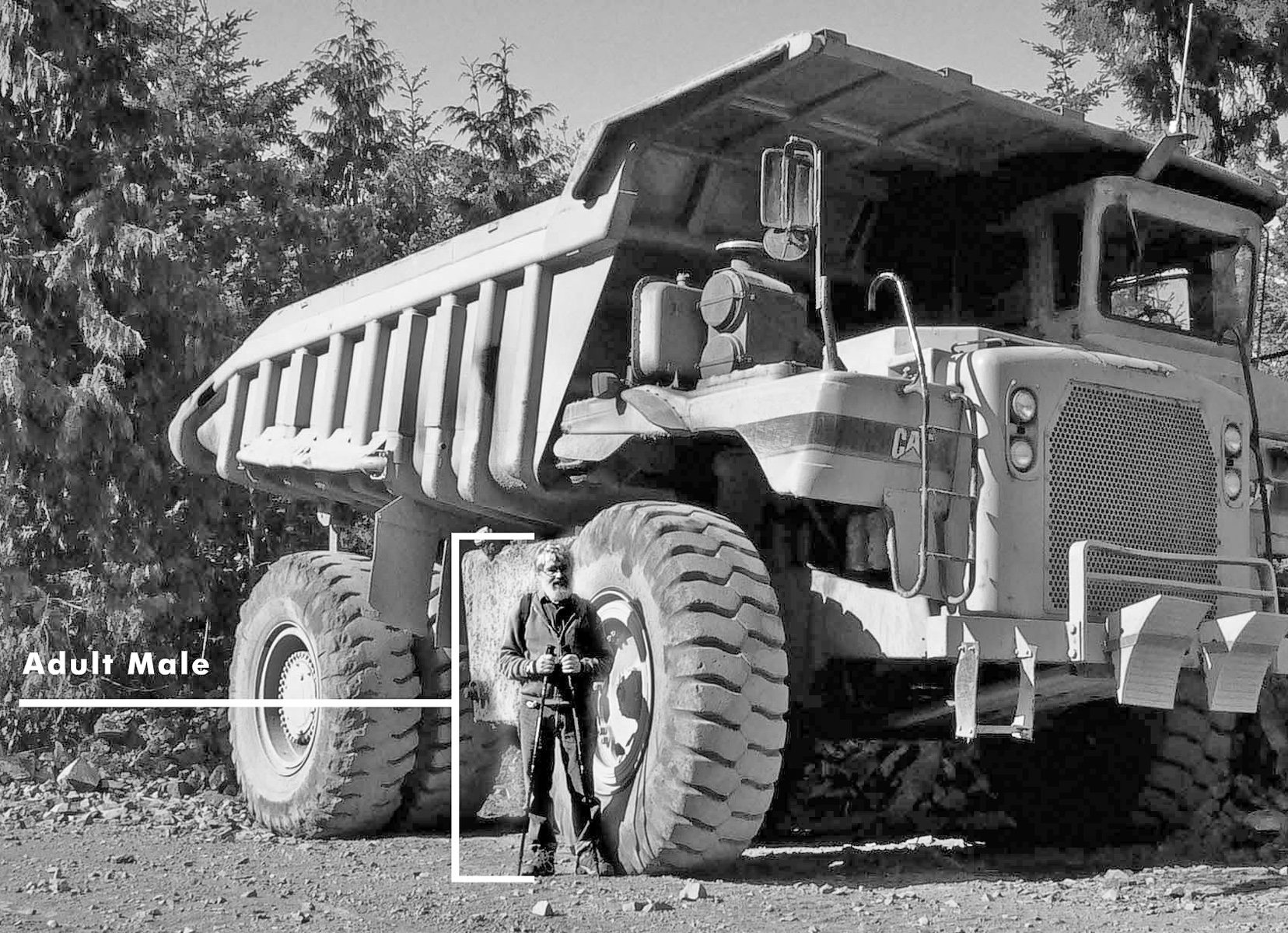
photo: Lummi Island Conservancy
This is a mining vehicle that was used in the quarry operation. According to Meredith Moench, volunteers with the trust decided to leave behind some of the tires to show the scale of the quarry operations.
“It doesn’t take very long to destroy something, but it can take generations to recover it,” Alika Herreshoff , a previous executive director and current volunteer with the Trust, said.
Peace at the Preserve
When Moench and her community were battling with the quarry to comply with the law, the land was private property. Lummi Island locals had to get creative in how they could step foot in the quarry to catch the company red-handed.
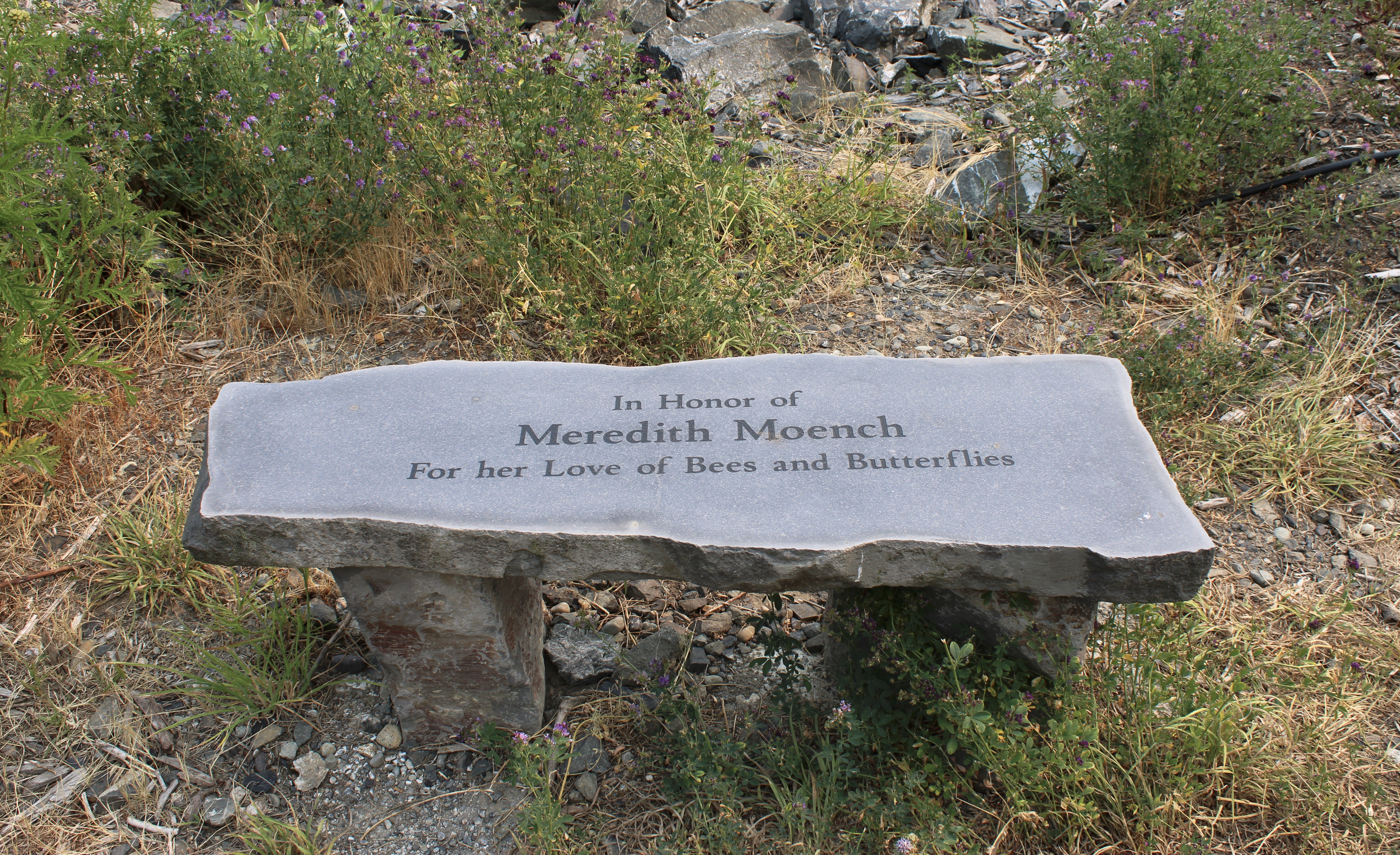
photo: Tori Lehman
A bench commemorating Meredith Moench near a walking trail at Aiston Preserve on Lummi Island, Wash., on Aug. 4, 2026.
Now, however, citizens can take a peaceful stroll with chickadees for company and admire the work of hundreds of volunteers and thousands of hours of effort as the Aiston Preserve blooms with life. The illegal work road built by Lummi Rock has now become a walking trail to access the high benches of the mountain wall with sweeping views of Hale Passage and Bellingham Bay. Saplings sprout through the rubber rings of truck tires that once hauled hundreds of pounds of rock away from its mountain and reach towards the sky, soon to be homes to crossbills and woodpeckers.
“There are a lot of people willing to volunteer for the greater good, and that’s a wonderful thing,” Herreshoff said.
Herreshoff and Moench collaborate with other volunteers to restore native pollinator habitat at the preserve. Small yellow flags currently dot the landscape to indicate seedlings in the ground that will sprout next spring to paint the landscape and provide more food and shelter for pollinators.
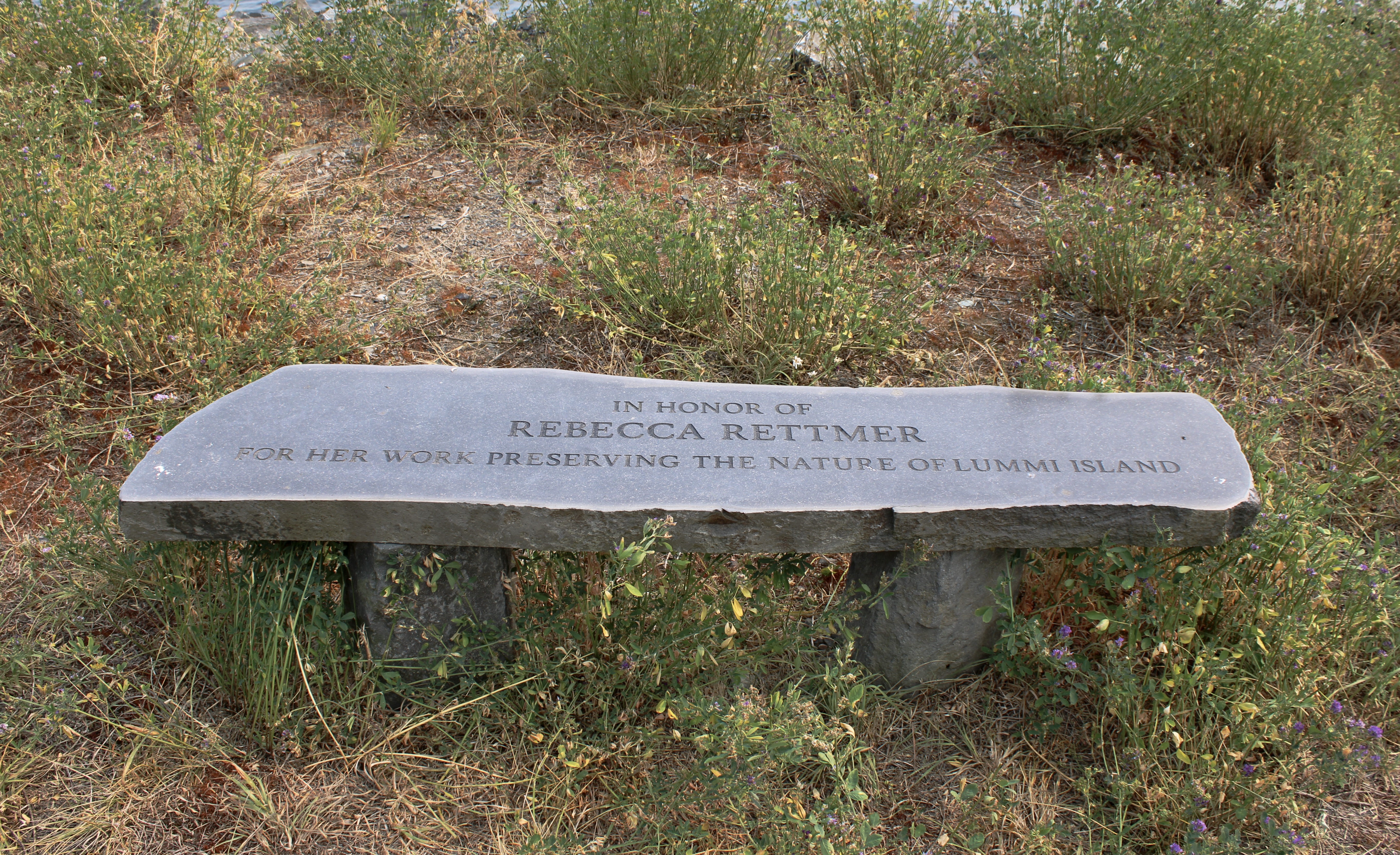
photo: Tori Lehman
A bench commemorating Rebecca Rettmer, a former executive director of the Lummi Island Heritage Trust, near a walking trail at Aiston Preserve on Lummi Island, Wash., on Aug. 4, 2026.
The preserve is still private property owned by the Trust, but is open to the public under the following guidelines:
- Preserves are open only during daylight hours.
- Please stay on the trails.
- Only foot traffic is permitted. Bicycles and motorized vehicles are not allowed.
- Foraging is not permitted. Please do not pick, remove, or disturb plants.
- Please leave nothing behind, including trash.
- Do not feed wildlife.
- Please help us be good neighbors. Respect private property and do not trespass.
- Please pick up after your dog and always keep them leashed.
- Fires, smoking, and alcohol are strictly prohibited.
- No hunting is permitted. Firearms or other weapons are not allowed.
- Camping is not allowed.
- Drones are not allowed.
“A preserve, in my mind, is for wildlife and habitat,” Moench said. “Humans can interact with that and they are welcome to be within that. But it’s not for human recreation.”
The Aiston Preserve is protecting a rare habitat known as rocky balds, which makes up less than one percent of the habitat in Whatcom and Skagit counties, according to the Washington Native Plant Society (4). Rocky balds are as the name implies — habitats with sparse tree coverage and rough, rocky soil that hosts shrubbery and wildflowers.
Restoration efforts are designed to help rehabilitate this native habitat, which is accustomed to high sun exposure and dry conditions, and is crucial for native species. Human recreation, like camping, biking, or foraging, would damage the fragile and only recently re-established habitat.
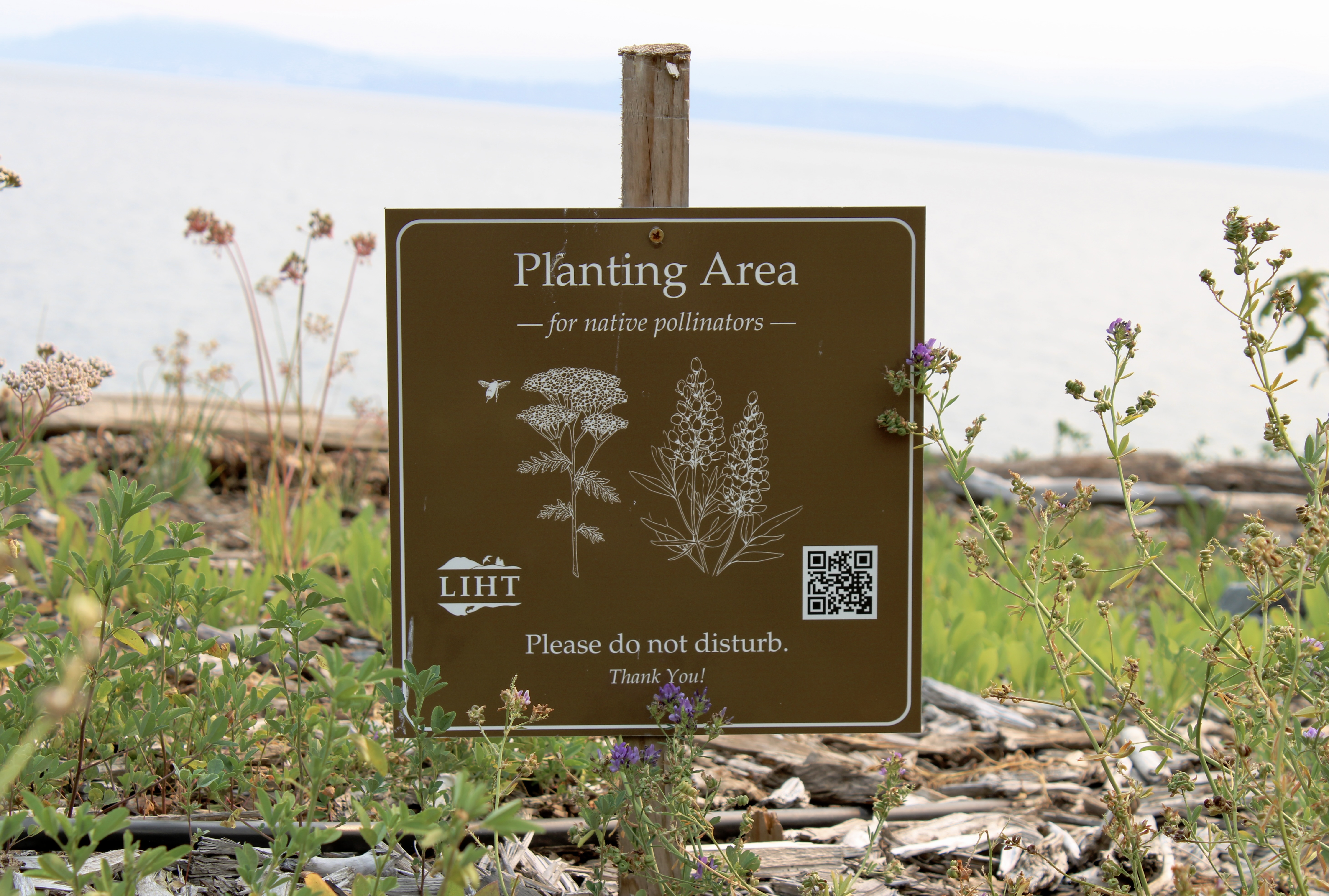
photo: Tori Lehman
A sign in the ground near newly planted seedling at Aiston Preserve on Lummi Island, Wash., on Aug. 4, 2026.
“There’s more biodiversity in those balds than you often find in the forest, if you’re talking about just plant species, which in turn supports our native pollinators,” Herreshoff said. “Those places are really just magical; it’s hard to find anything like it.”
Those interested in getting involved with the Lummi Island Heritage Trust can check out their volunteer website at liht. org/volunteer, with opportunities ranging from one to three-hour long commitments in events, mailing, trail maintenance, invasive weed removal, and kids’ program assistance.
______________________________
Tori Lehman is a Western Washington University alum who studied journalism and environmental studies and has lived in Whatcom County since 2022. When she’s not reporting, she’s found bird-watching or strolling through downtown Bellingham.
References: