Beaks and Bills
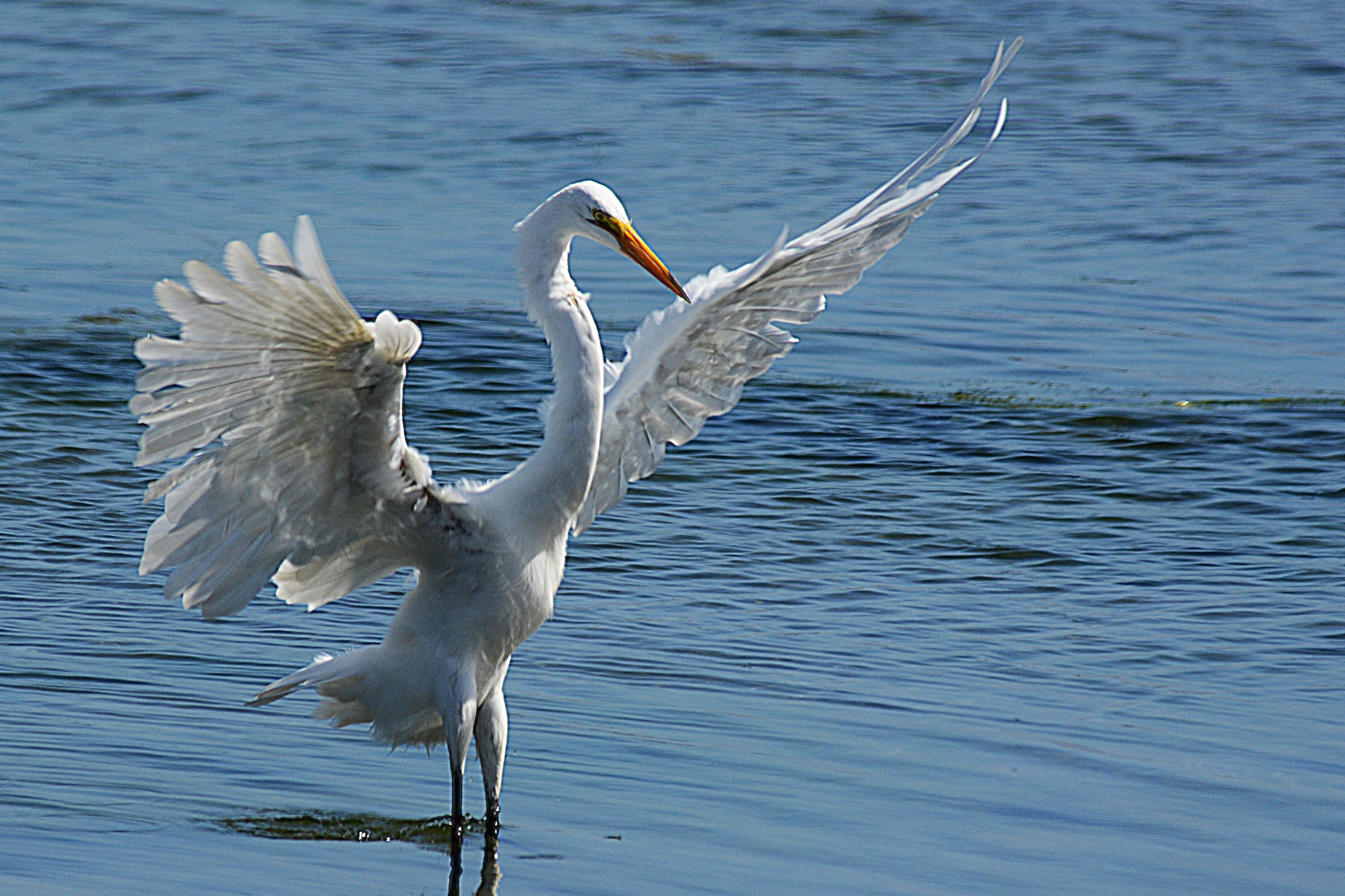
photo: Joe Meche
Great egret
by Joe Meche
The old slogan “California or Bust” originated during the westward expansion and gold rush eras of the 19th century. It was frequently heard concurrently during the Great Depression and the Dust Bowl days of the 20th century. It was an idiom that derived from the resolve of finding riches or at least a better life than what was being left behind. The concept was to get to California or go broke trying.
It’s an old saying from a different time but we always embrace it, albeit humorously, when we head south to visit the Golden State and relatives who live there. This trip was motivated by the lure of yet another surprise birthday party for my now 85-year-old sister in San Francisco. My nephew did all the planning and Cindy and I were just to be there when she walked into the crowded room, adding a surprise to the surprise. She had no idea we were going to be there … and she was stunned on both counts, to say the least. Actually, we won the door prize for having traveled the farthest to get to the party!
In the period leading up to the big day, I donned my planning cap to choose routes and secure lodging along the way there and back … something I truly enjoy doing. Not surprisingly, on previous trips I’ve always included stops at wildlife refuges or other locations to include a few birds in the mix. This trip, however, was different enough that we just needed to get there to connect with my nephew to coordinate the big bash. As a former city planner, he was in his own kind of heaven.
Somewhere in our shared history of travel together, we chose to take a big bite on Day 1 to get a big part of the trip behind us and then relax our pace. On previous trips, we always headed to Siskiyou Summit to cross into California from Oregon but chose an alternative this year. We left the always entertaining I-5 at Eugene and headed for the coast and the magical U.S. Highway 101. The original plan involved heading to the coast at Grants Pass, but construction and wildfires dictated another choice. That was fine with me since leaving the main highway is always appealing to this blue highways boy! Crescent City was still the target as we crossed into California the first night. We checked into our lodging well after dark and were more road-weary than hungry.
Getting to San Francisco on Day 2 was much less time consuming than the first leg and we met my nephew for a pre-party session in Sausalito. We crossed the Golden Gate and settled into our hotel, which proved to be a perfect location for the days ahead. It was just four blocks from my sister’s place so we were all set. As I mentioned earlier, the party was a big success so then we were free from the secrecy involved and able to spend time enjoying one of America’s most dynamic cities.
Coincidentally, our oldest grandson, Finnigan Johnson, also lives in the city so we were able to spend time with him at the party and at breakfast the next morning. The plot thickened significantly as we parked at his place and had our first Waymo experience to and from Orphan Andy’s in the Castro District. Waymos are the driverless cars that are becoming popular in many cities around the country. I found the rides to be exhilarating and felt totally safe on the busy streets of the big city.
The next day, we all took in Chinatown which, in and of itself, is a rich experience. We found a great restaurant and enjoyed an outside table right on the street! On previous visits, we had barely scratched the surface but we walked quite a bit and took in the sights and sounds as never before. To say that Chinatown is fascinating would be a major understatement. Where Chinatown borders on North Beach, we visited the famous City Lights bookstore, cornerstone of beat generation writers and poets, including a personal favorite, Jack Kerouac. The famous sign out front says, “Books Not Bombs.”
Cindy checked off her wish list by visiting Chinatown and I wanted to spend time at Crissy Field. This area was originally a salt marsh and estuary and lies east of the Golden Gate Bridge. Its rich history includes native peoples who utilized the area to harvest fish and shellfish, leaving behind shell middens in their seasonal camps. The Spanish arrived in 1776 and used the area for livestock grazing and agriculture. They called the area El Presidio.
The U.S. Army took control of the land in 1846 using the wetlands for dumping and draining. After years of draining and filling the marshland, they eventually paved it over and built an airstrip. Over the years, Crissy Field served as a base for a series of military uses for both the army and air corps during World War I and II. Many of the original buildings have been preserved. The National Park Service took over the Presidio and Crissy Field in 1994 and eventually worked with the Golden Gate National Parks Conservancy to revitalize the area. Crissy Field and the entire shoreline opened to the public in 2001.
This area on San Francisco Bay got my attention on previous visits as a great place to see birds. The remaining tidal lands host a nice mix of birds including godwits, curlews, and other shorebirds, along with pelicans and egrets. As your faithful Beaks and Bills reporter, I had to stop by. The great thing about the area is that the birds are mostly oblivious to the human activities taking place all around them. Birds seem to know safe havens when they find them.
After three days in this fascinating city, it was time to head to Dillon Beach to wind down our visit before heading north. We chose California Highway 1 to slow the pace and enjoy one of the best coastal byways in the state. We were intrigued by the numerous guano-covered off shore rocks along the way … there will be no shortage of cormorants this year. We were delighted to find one of our best meals of the entire trip at Parkside in Stinson Beach. There’s something special about good food consumed in a perfect outdoor setting a short walk from the beach.
We rolled into their Dillon Beach digs well before my sister and nephew arrived. In three days, we never did get to enjoy the views due to fog! We did enjoy the hospitality as always, which included daily hot tubs and a variety of treats like homemade chili and margaritas along with Cindy’s incredible salads. We left the fog to find sunshine and the prerequisite fish and chips in Bodega Bay after a scenic side trip to the mouth of the Russian River at Jenner. The California coast never fails to deliver. Bodega Bay and Bodega Head are reliable locations for a variety of good birds … and wind!
Parting is always “such sweet sorrow” but on Day 8 it was time to say goodbye to Dillon Beach and head home, reversing the route we came in on for the most part. We stayed in the same hotel in Crescent City and spent the next night in a unique hotel in Lincoln City, OR, that sits right on the boundary of The Siletz Bay National Wildlife Refuge. I’ll stash this away for future reference when migration time rolls around and the fog is not a factor … good luck to me.
Before we reached Lincoln City,we stopped for dinner in Depoe Bay for the best-ever fish and chips. After Lincoln City, we hit the road knowing that home was waiting in Bellingham. It’s easy to plan when to take on Seattle traffic when you’re heading south but northbound is always a crapshoot … so we hit the evening rush hour! Oh well, we decided to grin and bear it knowing that our next stop was reserved. It was a great getaway in every respect and now we can start planning our next one!
**As a postscript to this journey, we’ve decided there will be NO MORE big bites on the first day! Thirteen hours in the saddle from Bellingham to Crescent City reminded us that we were much younger a few years ago and smaller bites would work better in our golden years. Also of note was the 110-degree temperature south of Eureka, marking our highest temp of any day in our shared history of road trips.
___________________________
Joe Meche is a past president of the North Cascades Audubon Society and was a member of the board of directors for 20 years. He has been watching birds for more than 70 years and photographing birds and landscapes for more than 50 years. He has written over 250 columns for Whatcom Watch.