Beaks and Bills
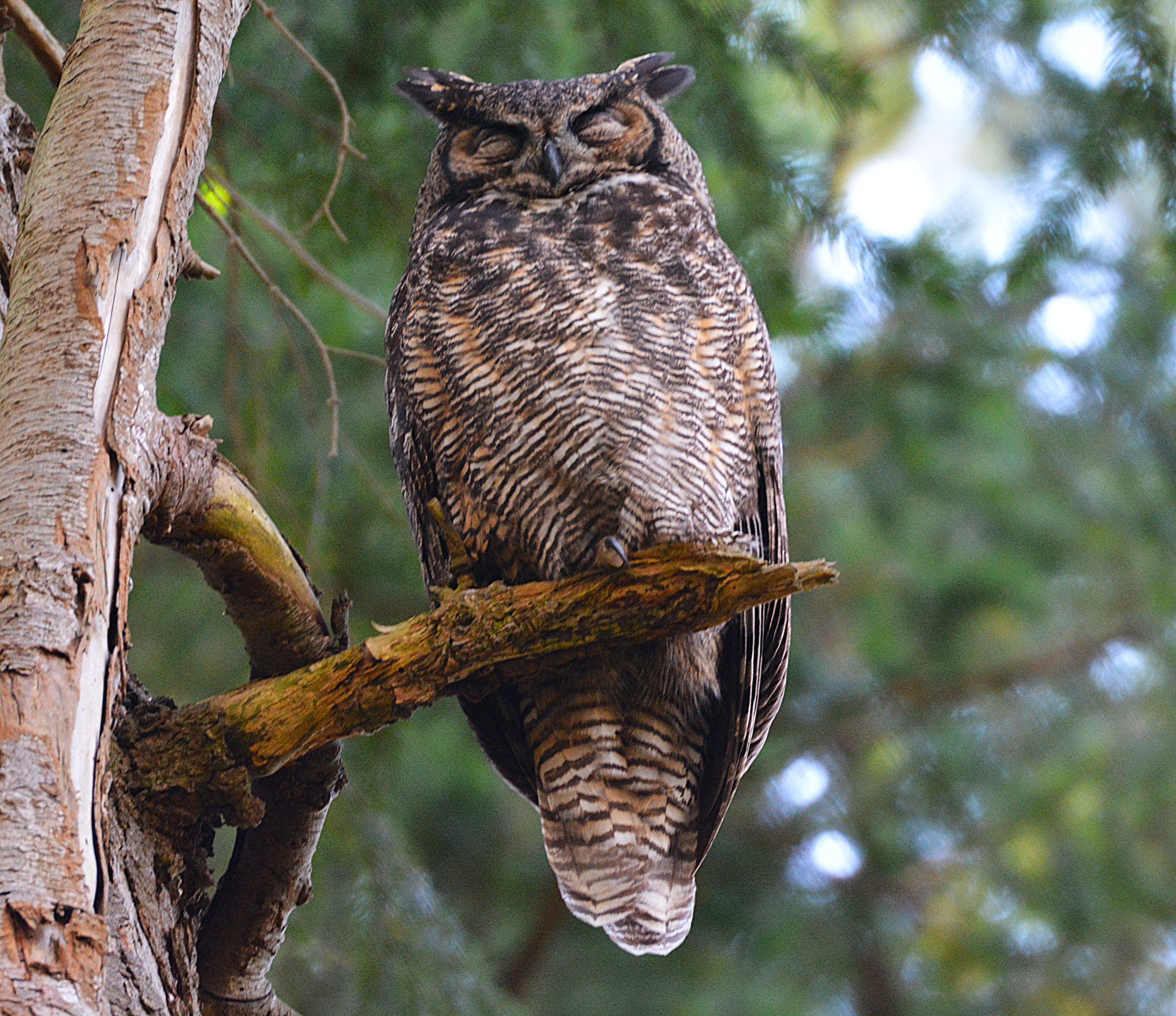
photo: Joe Meche
Great horned owl
by Joe Meche
As Cindy and I prepare for a Monday morning departure on our annual fall trip to the east side of the Cascade Crest, I’d like to share these short clips about two of my favorite places to spend time, gleaned after numerous visits in the past 49 years as a Bellinghamster. I visited them over the past two weeks on a pair of short junkets just to scratch an itch to get out. Both places are filled a lot of great memories and always offer a peaceful setting that’s good for what might ail you. Check them out when you feel the urge and you’ll see what I mean.
Up the Skagit
Every year, twice a year in fact, Cindy and I treat ourselves to a trip to the usually warmer and drier side of the Cascades. In spring, we look forward to leaving the wet side behind for the often dry landscape of Eastern Washington. In the fall, it’s a similar experience with the first throes of fall in the air. We also know that Washington Pass will close shortly after the first snows begin to fly, so it’s our way of saying goodbye until spring when the cycle continues. No matter the time of year, we’ve always made our first eastbound pit stop at the Howard Miller Steelhead Park in Rockport.
The campground at the park piqued our curiosity on every trip and we always thought that one day we just might choose to give it a try. But, after more than 30 years of the same old song, we never did stay long enough. We just had to keep going. This year, however, we found it to be the perfect opportunity to try out our newest camping wrinkle … a small Casita camping trailer. The evolution over all those years from a two-person tent to a popup trailer and then to the latest incarnation has been laid out in this column almost step-by-step, so you can see how we’ve risen to the lofty heights of camping with our own shower and toilet!
The park itself sits right on the Skagit River in the small community of Rockport just off Highway 20 between Concrete and Marblemount. This lovely little park was named in honor of Howard Miller, who served four consecutive terms as Skagit County Commissioner. During his tenure as commissioner, he was instrumental in acquiring the first 15 acres of land for the park in 1966. The park has grown to 100 acres and offers one of the most peaceful camping sites you’ll find anywhere … and a river runs through it.
Just upstream from the campground is the Skagit River Bald Eagle Natural Area with the Bald Eagle Interpretive Center across the road from the park. Hundreds of bald eagles gather during the winter months to feed on the salmon that have come upstream to spawn and die. The best time of year to view the eagles is from late December to the second week in January. And yes, we plan to reserve a spot at the campground sometime toward the end of the year. We have a cozy cabin on wheels complete with a heater!
The park is open year round and managed by Skagit County Parks. Aside from the wintering eagles, the park offers a number of trails traversing into mixed habitat along the river that offer good birding, especially in spring and early summer. If you’re not a birder and prefer fishing instead, the Skagit is one of Western Washington’s premier rivers for a variety of fish, including steelhead, rainbow and Dolly Varden trout, and, of course, salmon.
When I first moved to Bellingham in 1977, I spent more than a few delightful days fishing the Skagit from Newhalem down to Concrete, where the Baker River joins in with the rush to Puget Sound. I caught my first steelhead at the mouth of Goodell Creek, just downstream from Newhalem and many Dolly Varden on raft trips from Marblemount to Rockport. It’s safe to say that the Skagit holds a special place in my memory banks, as well as my heart. In fact, I wrote a poem, “An Ode to Fall,” while camped on the river in October about 40 years ago. I might actually publish it someday … if I can find it, that is.
An Overnighter at Keystone
The Washington State Ferry terminal that’s now known as Coupeville has always been Keystone to me, and, for what it’s worth, it will always be. The terminal is four miles from Coupeville, so one can only wonder why the name was changed. Small potatoes perhaps, but Keystone has always been a pretty special place to spend a day and a wonderful birding hotspot in certain times of year. The campground is part of Fort Casey State Park and is situated just a couple hundred feet from the actual ferry landing. The comings and goings of the ferries throughout the day are hardly noticeable since their efficient diesel engines are unusually quiet, and they don’t run at night.
The jetty at the landing regularly hosts a variety of birds from pigeon guillemots and rhinoceros auklets to numerous gull species, including the hundreds of Heermann’s gulls that I saw when I first arrived on Labor Day this year. As it is with humans, the large and regular ferry traffic is very little bother to the birds. Great blue herons are frequent nesters on the pilings where the ferries dock. Bald eagles are common visitors, and great horned owls nest in the woods above the campground. The recreational boat launch is busy during certain times of year, especially when salmon are on the move as they enter Puget Sound by way of Admiralty Inlet from the Strait of Juan de Fuca and the open ocean.
For a number of reasons, I haven’t been getting out and about as much as I used to, and I was motivated to try an overnighter just to see how things might have changed since my last visit. I’m happy to report that very little has changed and that’s a good thing in this case. If you’re not a birder or a fisher, it’s just a great place to take a lunch and spend the day reading or napping or just sitting on the dock of the bay (thanks, Otis Redding). A trip to Keystone also offers midway stops at Deception Pass, coming and going. Take Chuckanut Drive to hook up with Highway 20 to avoid the freeway and you’ll be glad you did.
Fall is upon us, so get out and enjoy my favorite of the four seasons!
_______________________________________
Joe Meche is a past president of the North Cascades Audubon Society and was a member of the board of directors for 20 years. He has been watching birds for more than 70 years and photographing birds and landscapes for more than 50 years. He has written over 250 columns for Whatcom Watch.