Native Plant Neighbors
by Eric Worden
A few years ago, I conducted an outdoor class in Bellingham’s Arroyo Park that I called “Nature Observation Workshop.” Arroyo Park is south of Bellingham, occupying a damp ravine that conducts the soothingly babbling Chuckanut Creek to Bellingham Bay. I walked my students a short distance along the verdant and wooded trail along the creek. We stopped near the footbridge where the class was to be conducted, and talked for a few minutes.
Then, I asked everyone to close their eyes, to visualize the area where we were standing, and to describe to me the abundant low growing plant that was carpeting the surrounding forest floor right up to our feet. Indeed, this one plant had carpeted most of the area along the trail that we had just walked. My students hadn’t the slightest idea about the plant; they couldn’t even describe it. Trying their best, they feebly guessed that ferns were covering the ground. When they opened their eyes and looked around their feet, for the first time in their lives, they saw Pacific waterleaf.
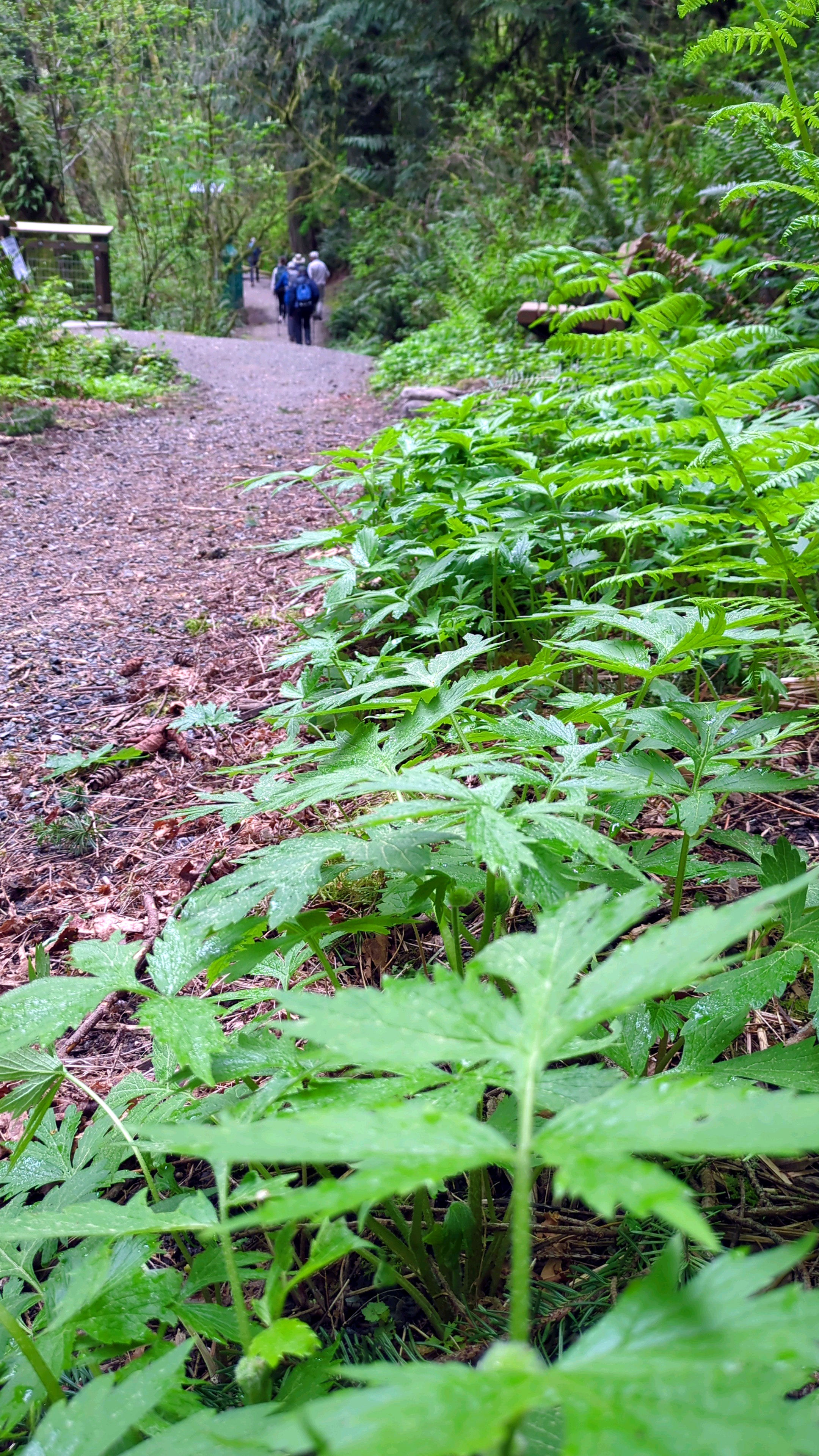
photo by Eric Worden
Waterleaf carpets the trailside in Bellingham’s Arroyo Park.
To be sure, photons of light reflected from Pacific waterleaf had entered their eyes many times before and formed images on their retinas, but their minds failed to perceive the plant pictured in the image. This is normal, and it’s what almost everyone experiences, and it’s why I was holding a workshop. Pacific waterleaf is another “invisible” plant. In the previous two articles of this “Native Plant Neighbors” column, I profiled two other invisible plants: red alder and osoberry.
These three plants, though gentle and pleasing to the eye, lack any large, visually arresting features. Osoberry is a partial exception: it gives a brief display of modestly showy white flowers in early spring. After that, though, anyone having eyes desensitized by tea saucer sized rhododendron, rose, and dahlia flowers will fail to see these other more subtle plants.
Waterleaf Grows With Vigor
After people finally focus their eyes on it though, most people feel like this is an attractive and intriguing plant! Its main aesthetic appeal is its softly flowing, cascading, carpeting of the forest floor in shady moist places. Waterleaf is delicate and cannot withstand direct sun exposure or dryness. However, given shade and generous moisture until July, this plant grows with great vigor — more vigor than almost any other plant of its stature, about one foot high. In many places — such as shady Arroyo Park — waterleaf covers large areas and suppresses other plants. In those same areas during the fall and winter, one will find bare earth with no visible plant life.
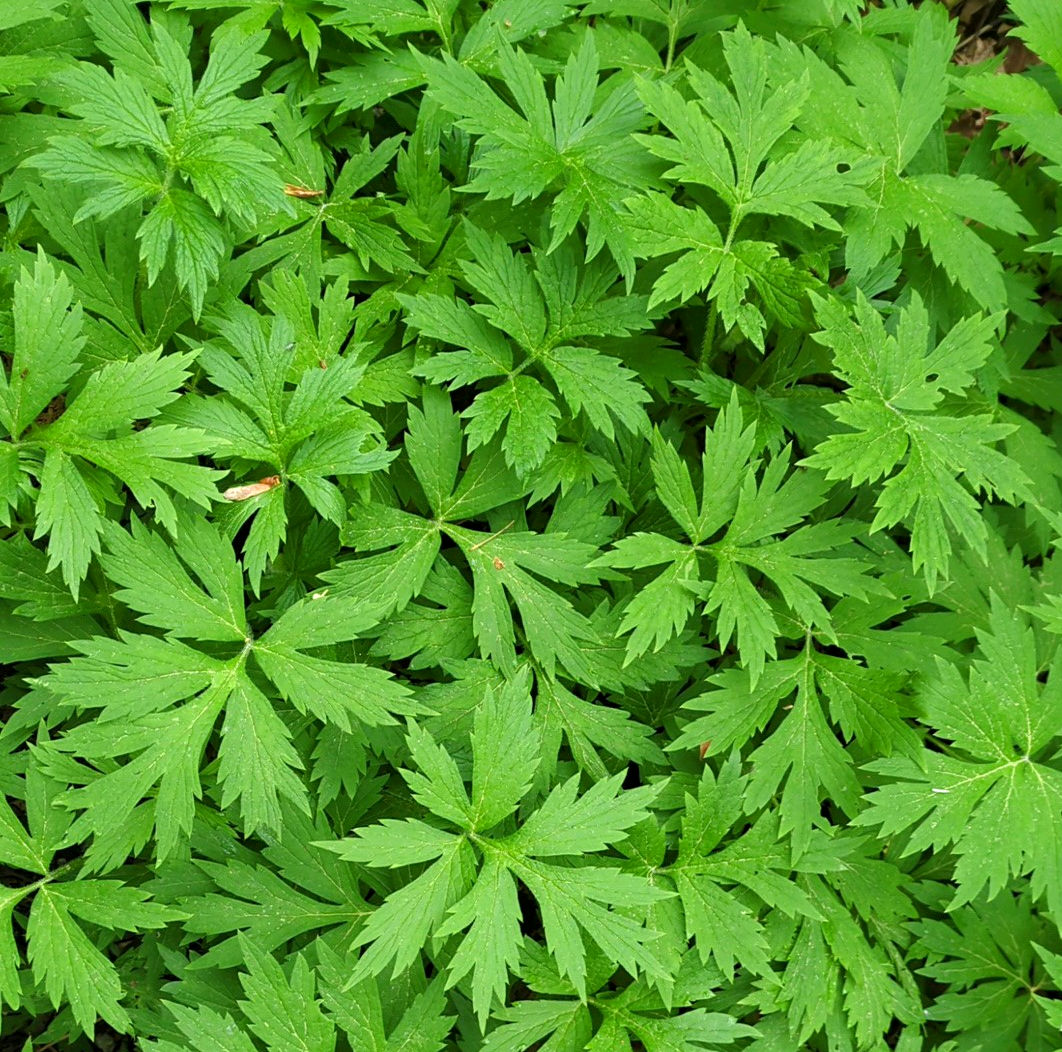
photo by Eric Worden
A carpet of waterleaf on the forest floor.
In those areas, the waterleaf rhizomes remain dormant under the ground waiting for next spring’s moisture. During the fall, where the soil is dry, no seeds will germinate and other plants grow little. In the spring, any seed that tries to germinate on that bare soil will quickly be overgrown by the spring carpet of waterleaf. Utilize this effect in your garden to cover shady areas that remain moist in summer: perhaps the edge of a hedge near a drainage area. Where moisture persists into late August, the waterleaf will also persist and continue growing; otherwise it will quickly shrivel, dry to dust, and wait for next spring.
Dominance of the Shade
In ideal conditions, its dominance of the shade is so strong that waterleaf even outcompetes English ivy! I recently documented this effect with a 20 month time lapse video of a patch of ground near Padden Creek where waterleaf and English ivy grow together. That particular spot had only modest summer moisture, so the two plants were evenly matched. Find the video on YouTube by searching, “Eric Worden waterleaf.” (https://www.youtube.com/watch?v=VSxEZrf0TGc)
At my Nature Observation Workshop, my students noticed some interesting details about the plant that many people of the past have also described. The stems emerge singly from the ground and do not branch. The plants are fuzzy and hairy all over the leaves and stems, like most of its relatives in the family. This character deters browsing by herbivores with tongues: deer dislike hairy plants.
Intriguing Details in Appearance
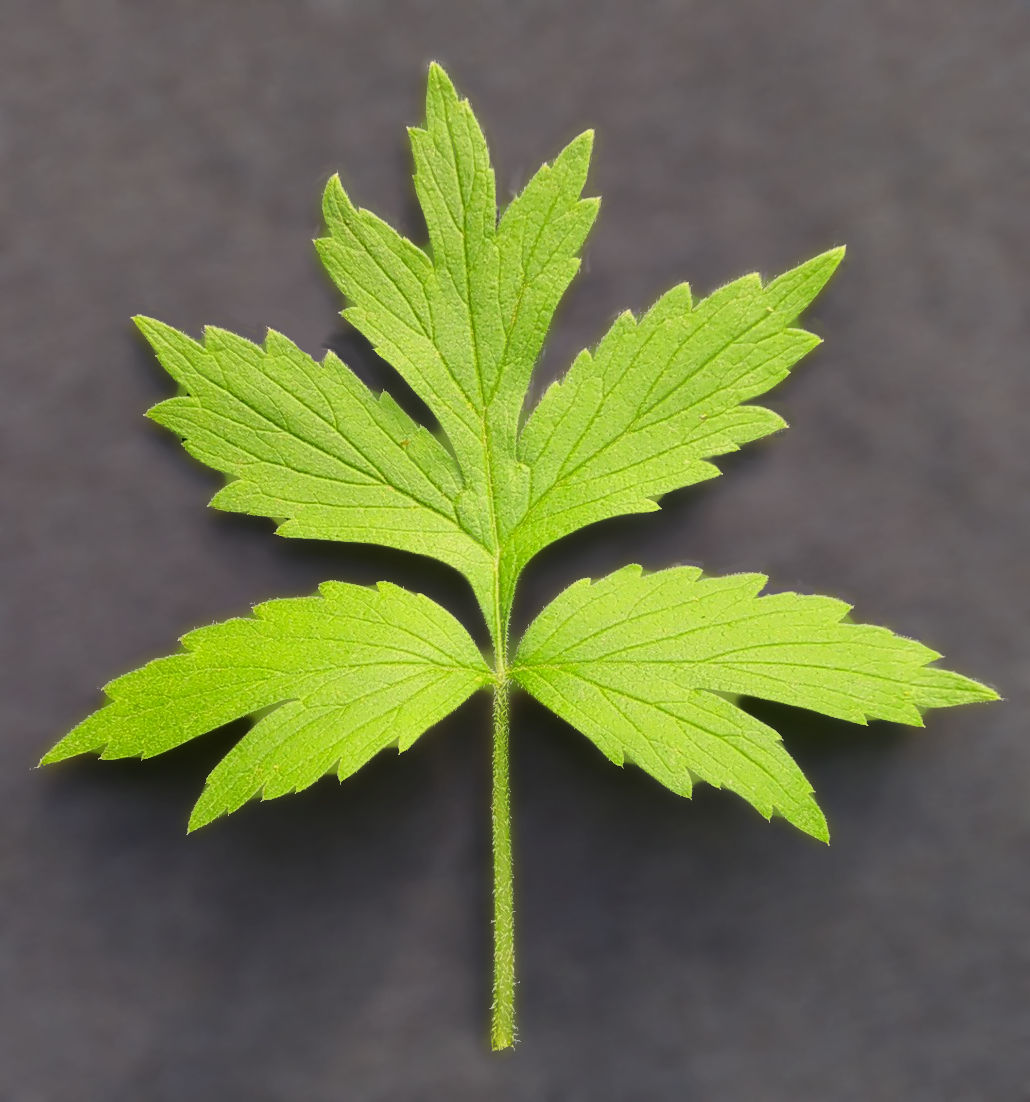
photo by Eric Worden
Waterleaf leaves have a unique and evocative shape.
An especially observant student noticed that the hairs on the stem point downward. We speculated that this could inhibit herbivorous insects from climbing up the stem. The leaves sometimes have artistic looking light spots — resembling water droplets — where leaf nodes meet. Perhaps that’s how the plant was named? No one knows for sure. Lastly, I find its leaf shape unique and evocative; if artistically recolored in harsh black and white lines, I think it would make a fine icon for a heavy metal band!
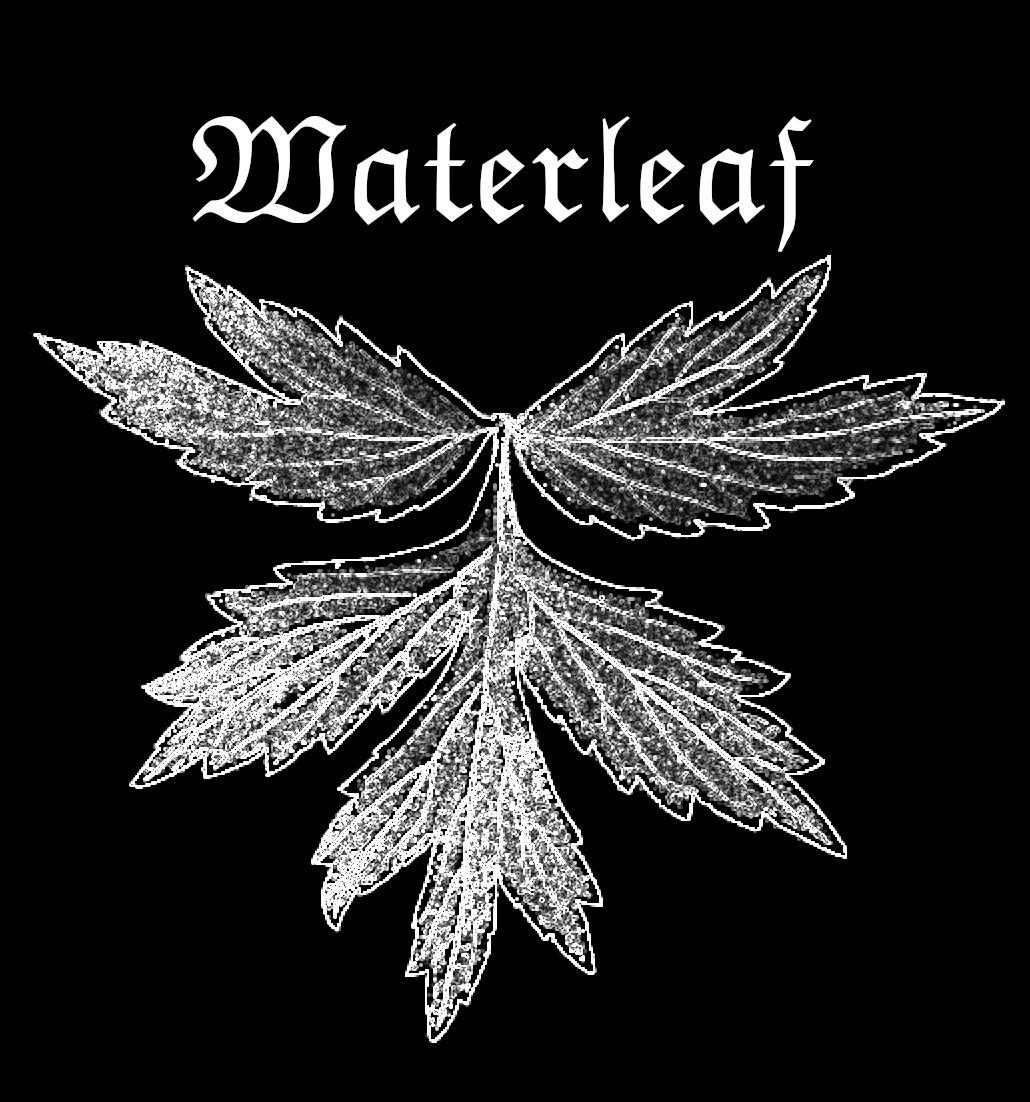
photo by Eric Worden
A waterleaf leaf transformed into a heavy metal band graphic.
In May, from the base of the highest leaf emerges a stalk with a dense cluster of usually drably colored (though sometimes violet) inconspicuous flowers. Though the flowers are inconspicuous to us, they appear highly conspicuous and attractive to bumble bees. In the shady forest floor of May, few other flowers are found, and waterleaf provides late spring abundance for these bees. Also, I have noticed in May and June that the waterleaf leaves are often notched and perforated by consuming insects. While in this case, the Victorian-inspired gardener may reach for the bug spray, my heart warms at seeing the chewed leaves, because it likely means that insects are flourishing there, and in turn that the birds of that forest may also be flourishing.
This plant, whose scientific name is Hydrophyllum tenuipes, has only a handful of close relatives in western Washington, and none in our area. Like the quiet person at the dinner party, after you sit down and get to know it, it reveals its uniqueness, depth, value, and interesting stories. However, now that the brilliance and energy of summer is arriving, next month I’ll visit a more extroverted plant. To learn more about waterleaf and other native plants, visit the Washington Native Plant Society at wnps.org.
______________________________
Eric Worden is a lifelong amateur naturalist and the chair of Koma Kulshan chapter of the Washington Native Plant Society.