Community Service Spotlight
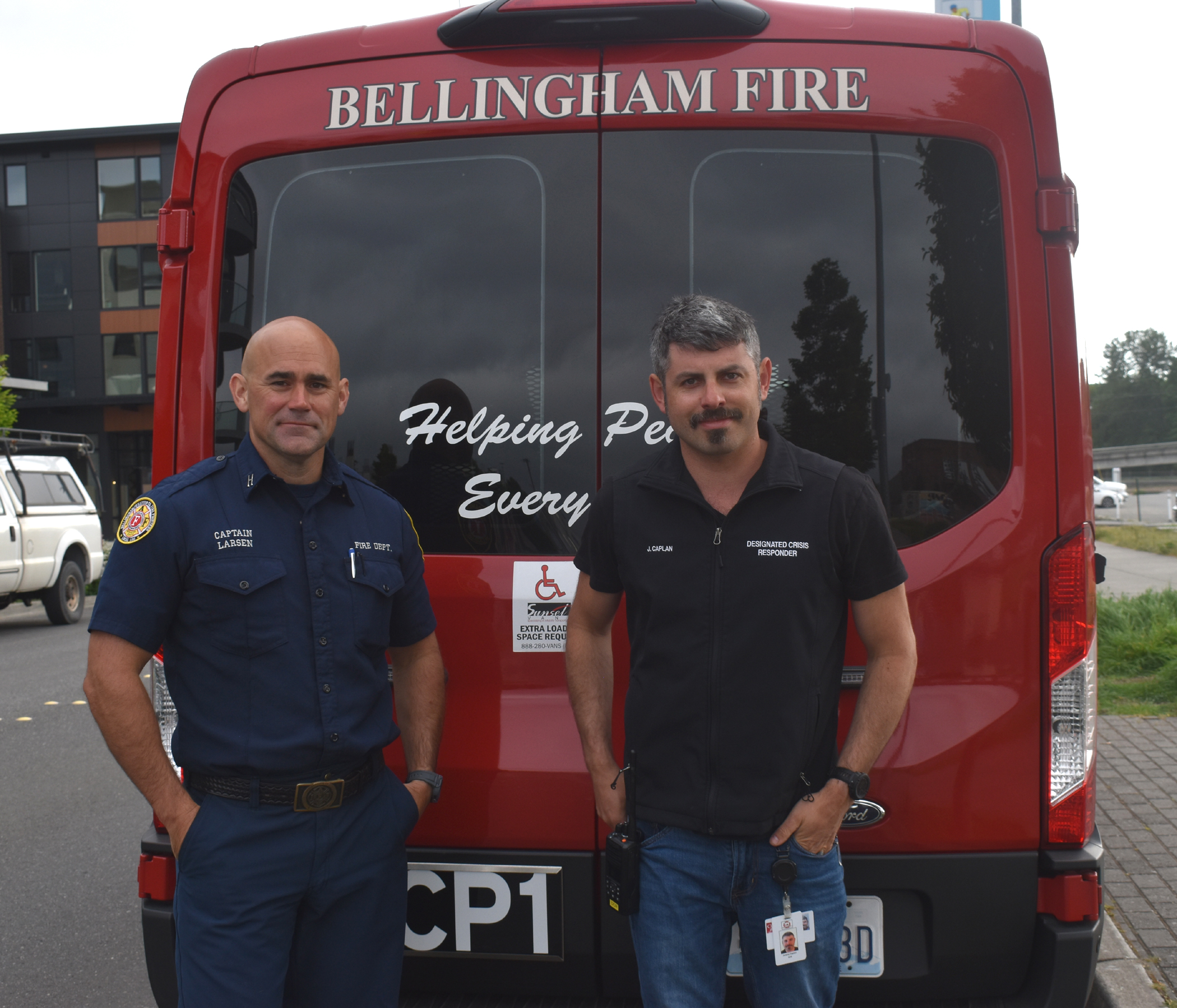
photo: Lauren Nicksic, Compass Health
Steve Larsen (left ), and Jeremy Caplan (right), pose in front of the “Mobile Integrated Healthcare” van.
Embedding a behavioral health-designated crisis responder with EMS and fire saves lives and conserves resources
by Steve Larsen and Jeremy Caplan
When you call 911 in a mental health or substance use crisis, every minute matters — and so does the kind of help that arrives. Bellingham residents have long relied on traditional emergency response models that were designed for medical and fire emergencies, but less tailored to urgent behavioral health needs. In Whatcom County, we’re taking a novel approach based in collaboration, de escalation, and a shared commitment to meeting people where they are.
A new collaboration between the Bellingham Fire Department and Compass Health has embedded a Designated Crisis Responder (DCR) directly alongside Emergency Medical Services (EMS) and fire personnel during calls involving behavioral health concerns. The model brings together community paramedics and mental health professionals in a single, coordinated response, ensuring that people in crisis receive both immediate medical attention and mental health support.
The program began organically, with the two agencies getting together to ask the question: How can we address the increasing overdose rates causing unnecessary death in our community? Those early efforts grew and formalized into the co responder program that exists today. By co locating at Bellingham Fire’s downtown office and designing protocols that allow us to jointly screen calls for potential behavioral health needs, our team members are physically and operationally equipped to collaborate. The result is faster, more appropriate care.
This partnership is part of a broader shift statewide toward more integrated, community-based solutions that recognize behavioral health as a crucial component of public safety. For our part, this wasn’t a model we pulled off the shelf or spun up in response to grants or funding, but rather built from the ground up by those of us who serve the community every day.
Community-Based Solutions
The partnership has transformed how our community responds to crises, with the DCR averaging response times of just seven to eight minutes when a 911 call comes in with a mental health or substance use emergency component. Quick response time and co dispatch are key ingredients that allow behavioral health professionals to connect people with the appropriate care and help ensure their safety. Whether for a mental health crisis or a substance use crisis, being on site immediately provides the DCR with additional data and enables immediate therapeutic interventions, de escalation, Involuntary Treatment Act (ITA) investigations, or appropriate referrals.
Since this program’s inception in February 2025, the Community Outreach DCR has provided over 200 services in direct partnership with Bellingham Fire Department.
The early success validates this coordinated approach and paves the way for further innovations in care and response models. It’s well worth the effort for local organizations to collaborate in new and different ways, working back from the goal of supporting community members during their most vulnerable moments.
Part of a statewide “Return on Response” awareness raising campaign, this effort highlights what’s possible when local organizations come together with a shared purpose: delivering timely, effective, and compassionate care when it matters most.
Across Washington state, partnership between behavioral health experts and first responders is transforming crisis response in our communities and improving access to mental health and substance use care.
_______________________________
Steve Larsen joined the Bellingham Fire Department in 2008 and became a Paramedic in 2010. He now serves as the department’s EMS Captain and Community Paramedic, leading eff orts to support high utilizers of the 911 system and improve care for vulnerable populations through proactive outreach and coordinated services.
Jeremy Caplan is a Licensed Independent Clinical Social Worker (LICSW) who currently works as a Designated Crisis Responder (DCR) at Compass Health. In this role, Jeremy is dispatched to active 911 calls and provides crisis behavioral health services in coresponse with the Bellingham Fire Department and local law enforcement agencies.