Life Before Flowers
All mushroom photos are by Fred Rhoades
Part II
by Fred Rhoades
This continues my occasional focus on different mushrooms that are relatively easy to identify to genus group, but show considerable diversity. Such a look will help you recognize some of the more common things you see in our local habitats and gain an appreciation for their diversity and the important roles they play in the environment.
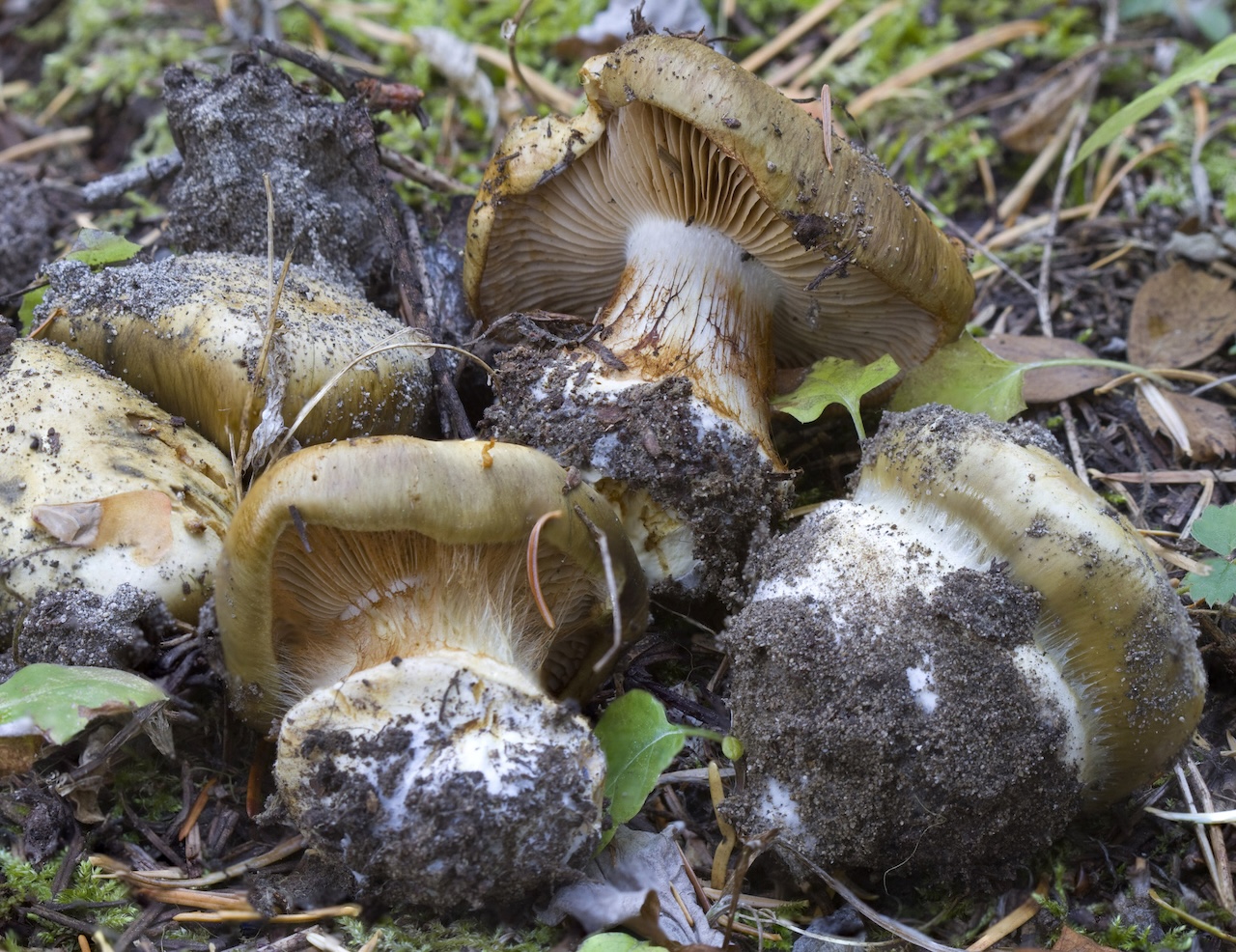
Cortinarius sp. – An unknown species, in the Cortinarius glaucopus group. Showing the cortina on the youngest individual to the lower right, further development in the lower center, and older development above where the cortina has left a fuzzy zone of rusty brown spores and hairs on the stipe.
The species in the genus Cortinarius, in terms of sheer numbers of and their overall roles in the ecology of their habitats, are arguably the most important of all mushrooms. They are all mycorrhizal with trees in the pine, oak and birch families. To understand the ecological nature of this relationship, see my article “The Mycorrhizal Connection” in the October/November 2021 issue of Whatcom Watch (https://whatcomwatch. org/index.php/article/the-mycorrhizal-connection/). This genus contains more species than any other mushroom with over 2,000 species worldwide and over 430 (and counting ) species in the Pacific Northwest.
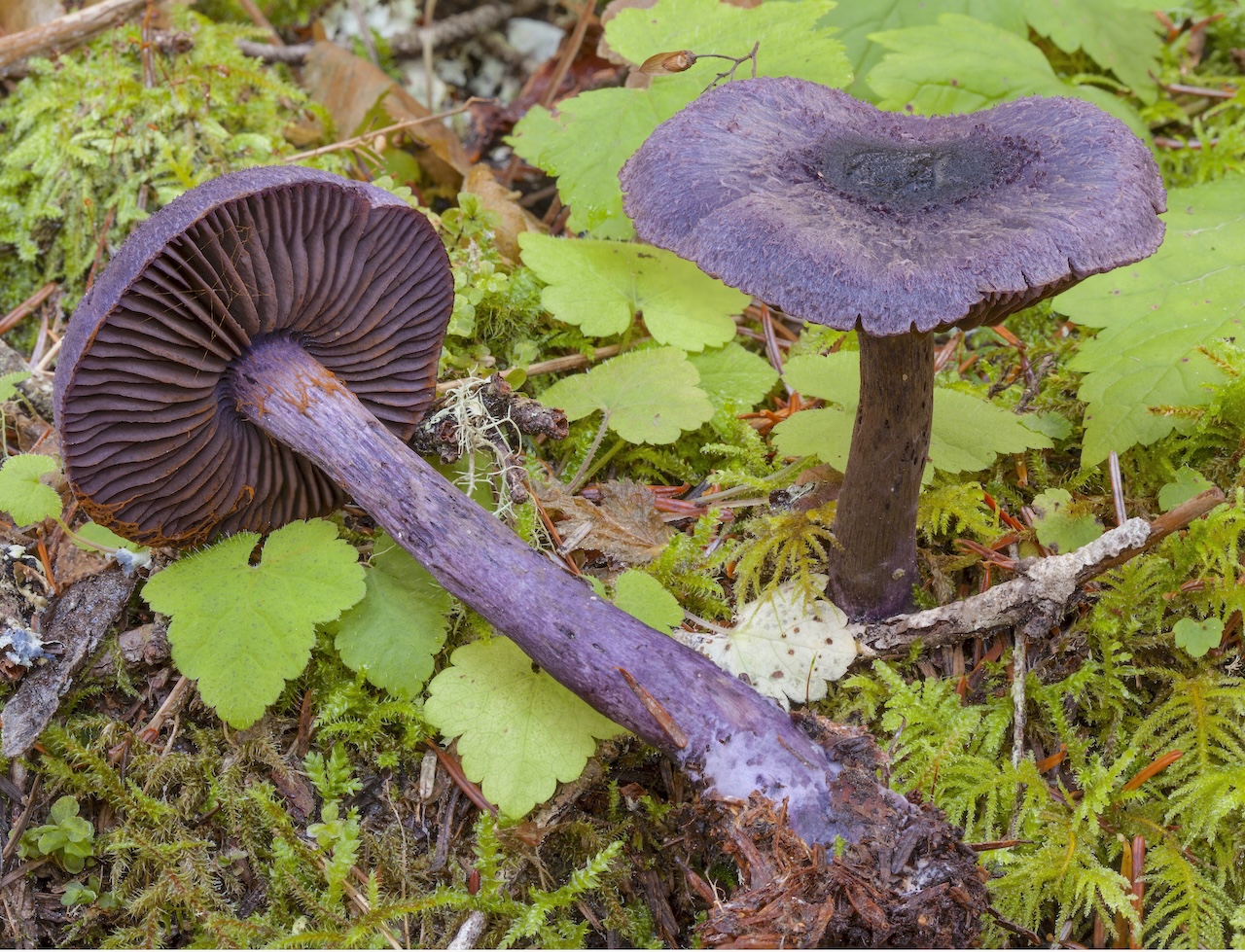
Cortinarius violaceus – Unmistakenly beautiful species, medium-sized that is deep, dark violet. The cortinas are mostly gone from the older individuals in this photo, with a bit of a rusty brown zone seen on the lower one’s stipe. This species is very recognizable and is edible though perhaps best left to experienced mycophagists.
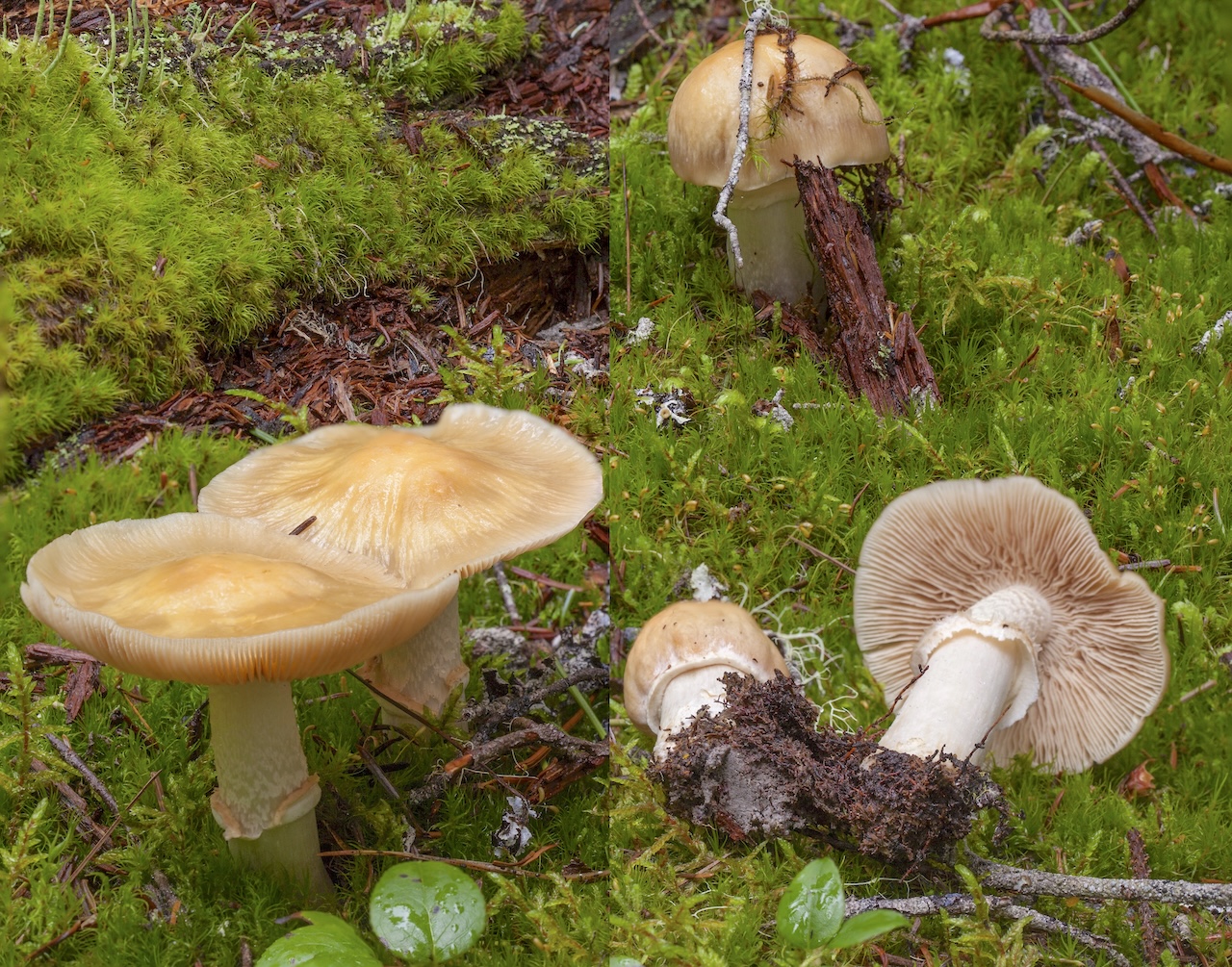
Cortinarius caperatus – This is the only Cortinarius with a membraneous veil and ring rather than a cortina. It is a rich, light brown and always occurs in broad, scatted groups of a dozen or so individuals apiece. It was classified in a separate genus, Rozites, until its DNA sequence showed it belonged in the middle of all the other Cortinarius species. Edible (reports vary on how desirable) and now known by the common name, “Granny’s Nightcap.” For PC reasons, the old common name, “Gypsy Mushroom” (named for its habit of occurring in loose groups), is now avoided.
To help clarify this diversity, the genus was broken up into sections based on macroscopic features such as color change, viscidity (sliminess when wet) of caps and stipes, and stipe shape. But, again, because of recent DNA work, even these classic subcategories don’t entirely work and mycologists are redistributing species among some of these “subgenera” and some new ones.
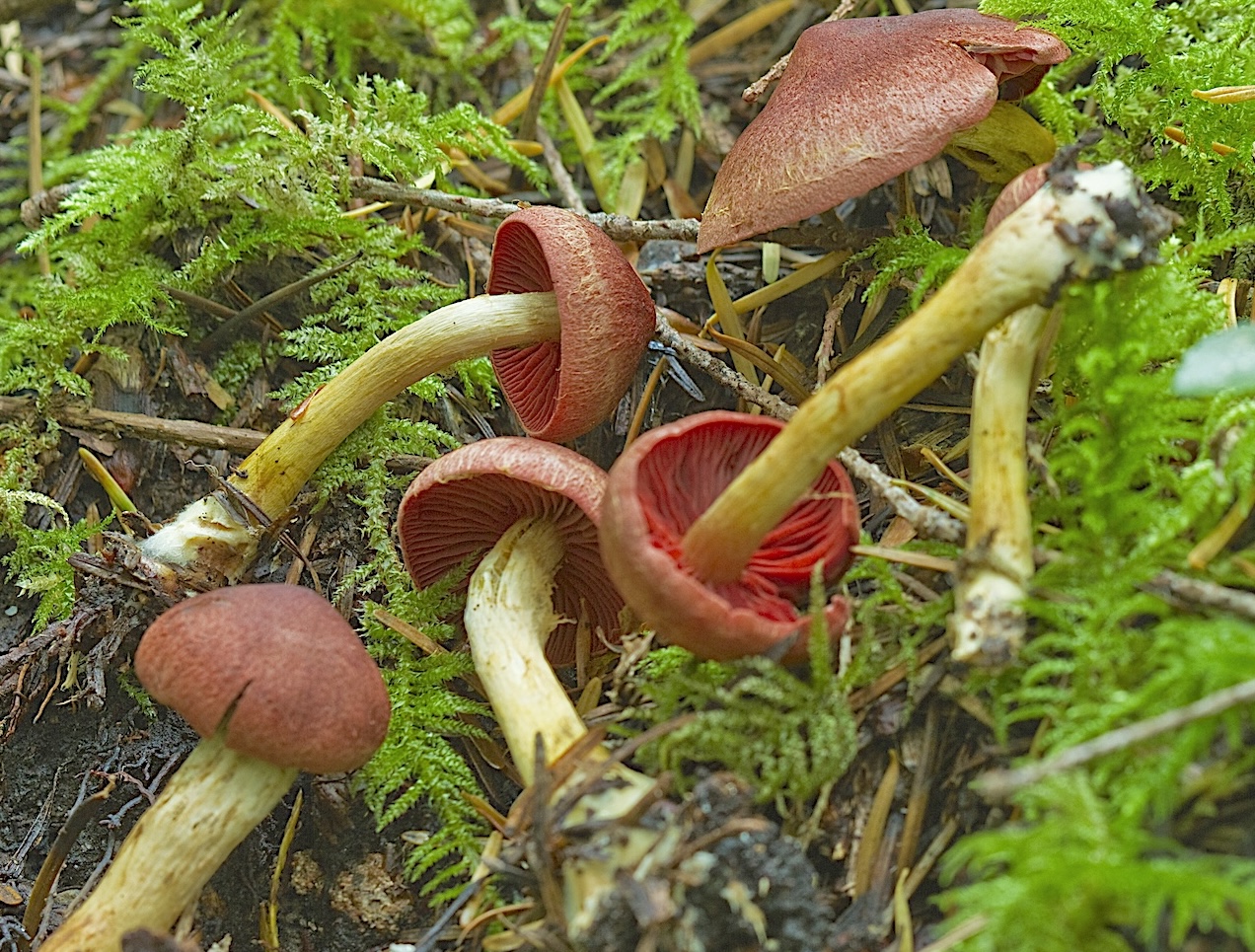
Cortinarius ominosus – Part of a group of medium-sized species with dry caps and bright colors that have been placed in the sub-genus Dermocybe. This one has yellowish stipes and salmon to brown caps with bright reddish salmon gills. The local species in this group are in flux with some older names no longer used. Many of them have been used by natural dyers since they produce rich colors in yarns and fabrics like the colors in the mushrooms. Some Dermocybes are very, very toxic.
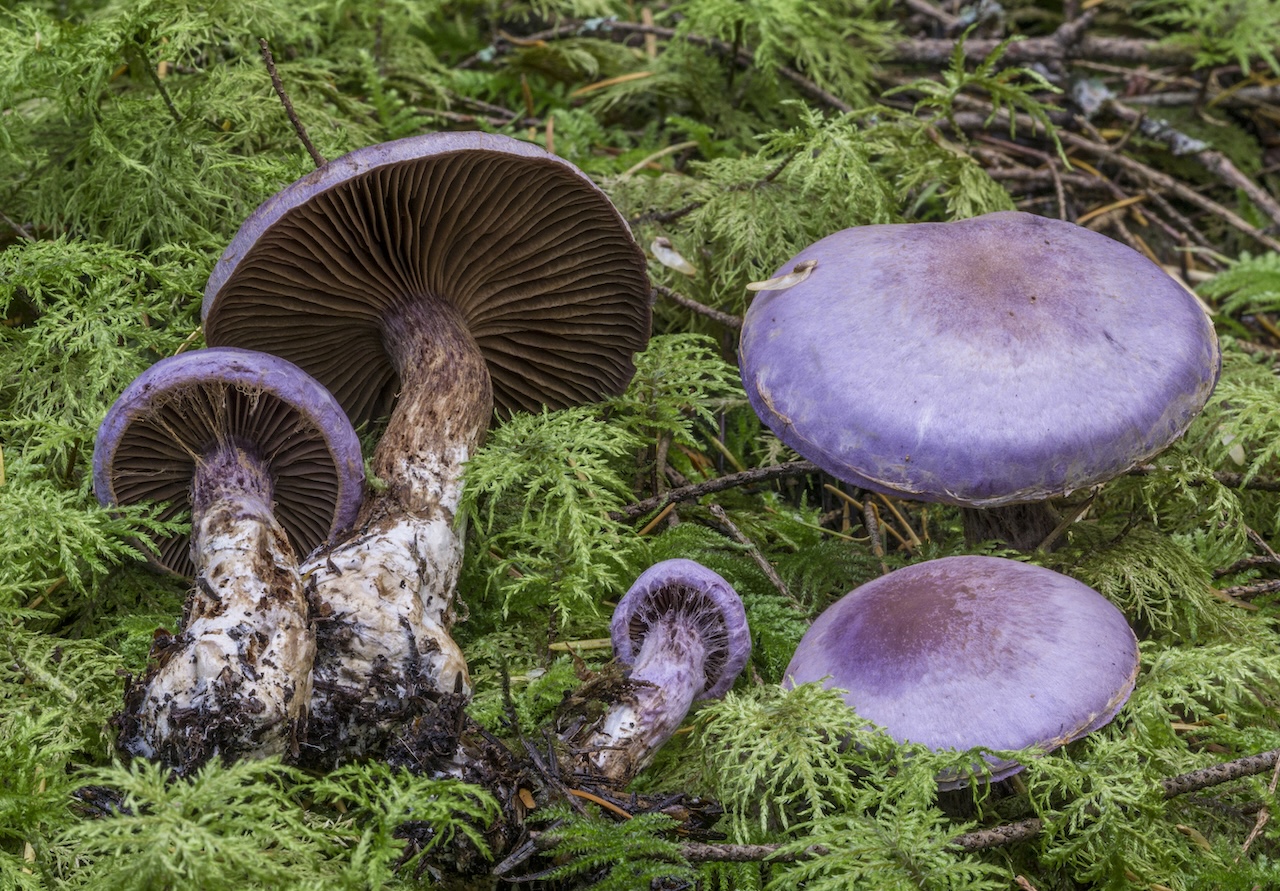
Cortinarius traganus – Another violet species though more of a lighter lilac shade than C. violaceus and having a distinctive odor of overripe pears which makes it relatively easy to identify. Beautiful but poisonous or at least indigestible according to several sources.
We’ll call them all Cortinarius. Mostly, they are much larger mushrooms, although there are a few small to medium-sized ones. The genus was described by Elias Fries — the 18th century Swedish “Linnaeus of Mycology,” who figured out, at least we used to think, how to clearly identify the genus of mushrooms — as those mushrooms with rusty brown spores, usually notched gills and a “cortina.” A cortina is a cobwebby veil that covers the gills from stipe to cap margin during early development. The cortina is most evident on younger specimens, and, as the mushrooms expand, the cortina usually disappears, leaving only a rusty-brown, fuzzy zone on the stipe (see first two Cortinarius photos).
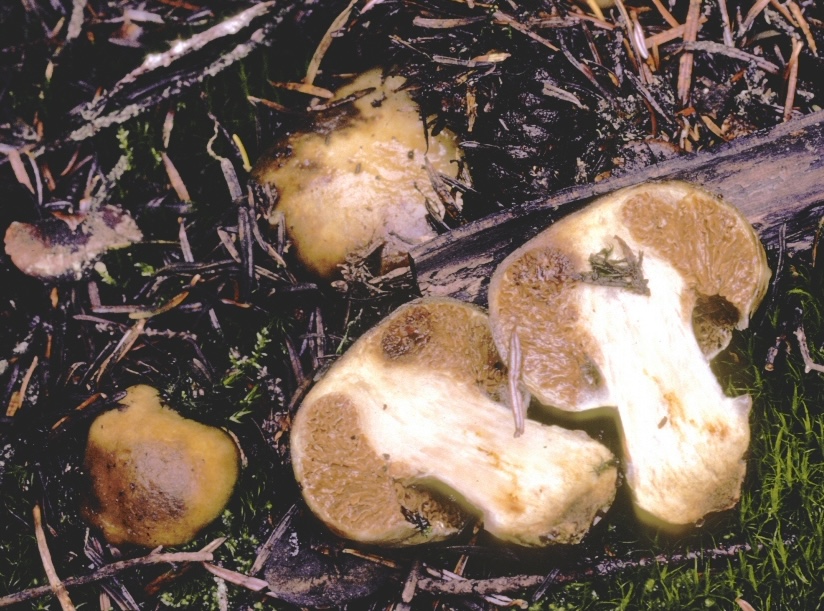
Cortinarius pinquis – This mushroom used to be classified in a separate genus, Thaxterogaster, a truffle genus, because it never rises up out of the soil to shed its spores but remains semi buried and unopened. It has a strong odor (something like very strong, proofing bread yeast) and attracts small mammals to dig it up, consume it, and later disperse the spores in the animal’s droppings. DNA study shows that this species has genes like other Cortinarius species to which it is more closely related than to other truffles.
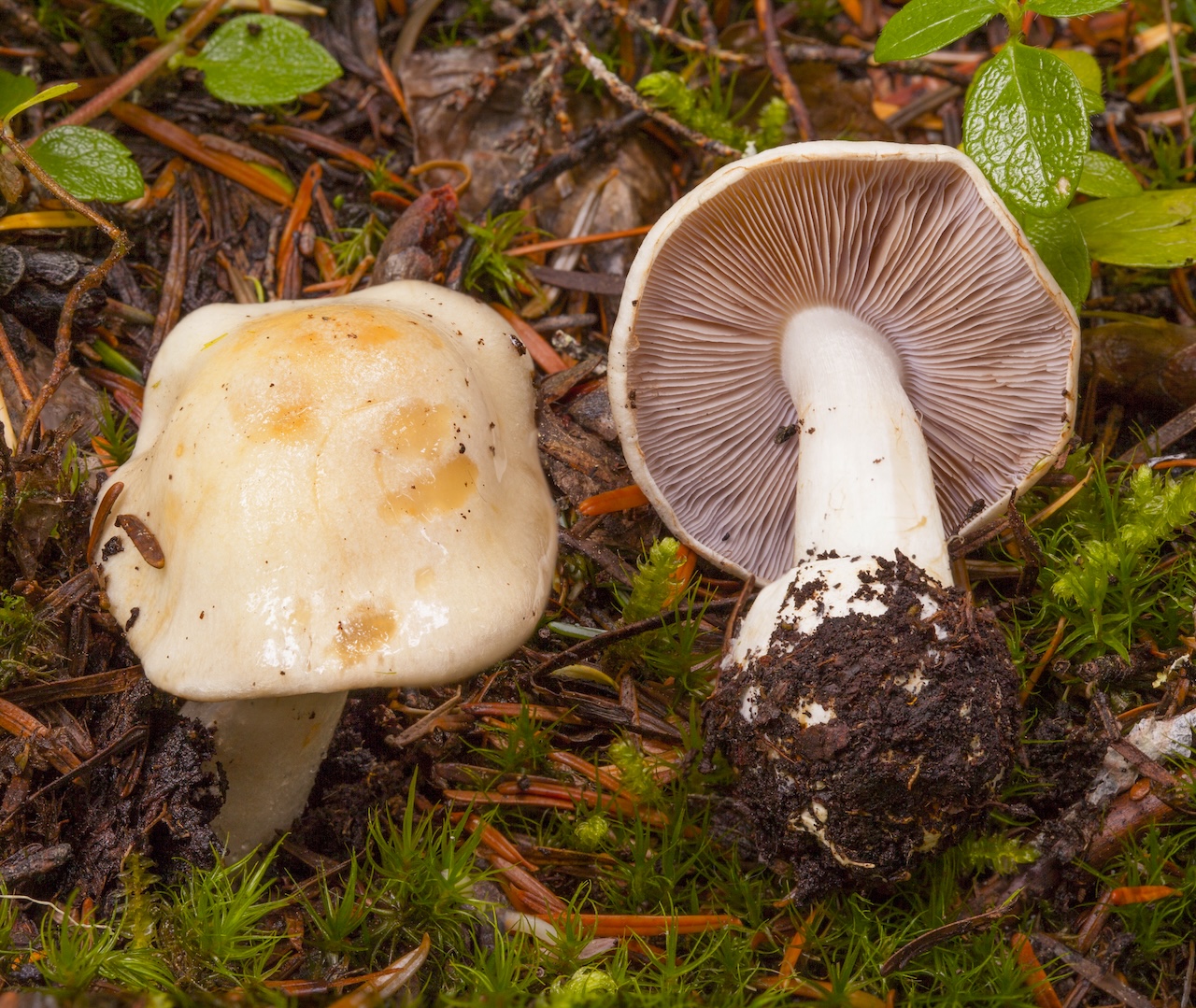
Cortinarius perplexus – In the group of Cortinarius with viscid (slimy) caps and dry stems (Phlegmacium). This one also has an “abruptly bulbous” stem base. An unusual color combination of the beige cap and stem with gills with a slight, purplish tone that can also occur on the cap and stipe.
With the huge species diversity comes huge variation in features. Many Cortinarius are richly colored. Some have slimy caps or stems, or both. Others have rich and distinctive odors. As for Mycena and many other mushroom genera in our area, many Cortinarius are known as having distinctive characters and DNA sequences but remain officially unnamed. It is the brave mycologist who attempts to name every Cortinarius he or she picks up. All of the species shown here are characteristic of our coniferous forests where they form mycorrhizae with Douglas fir, western hemlock and other species.
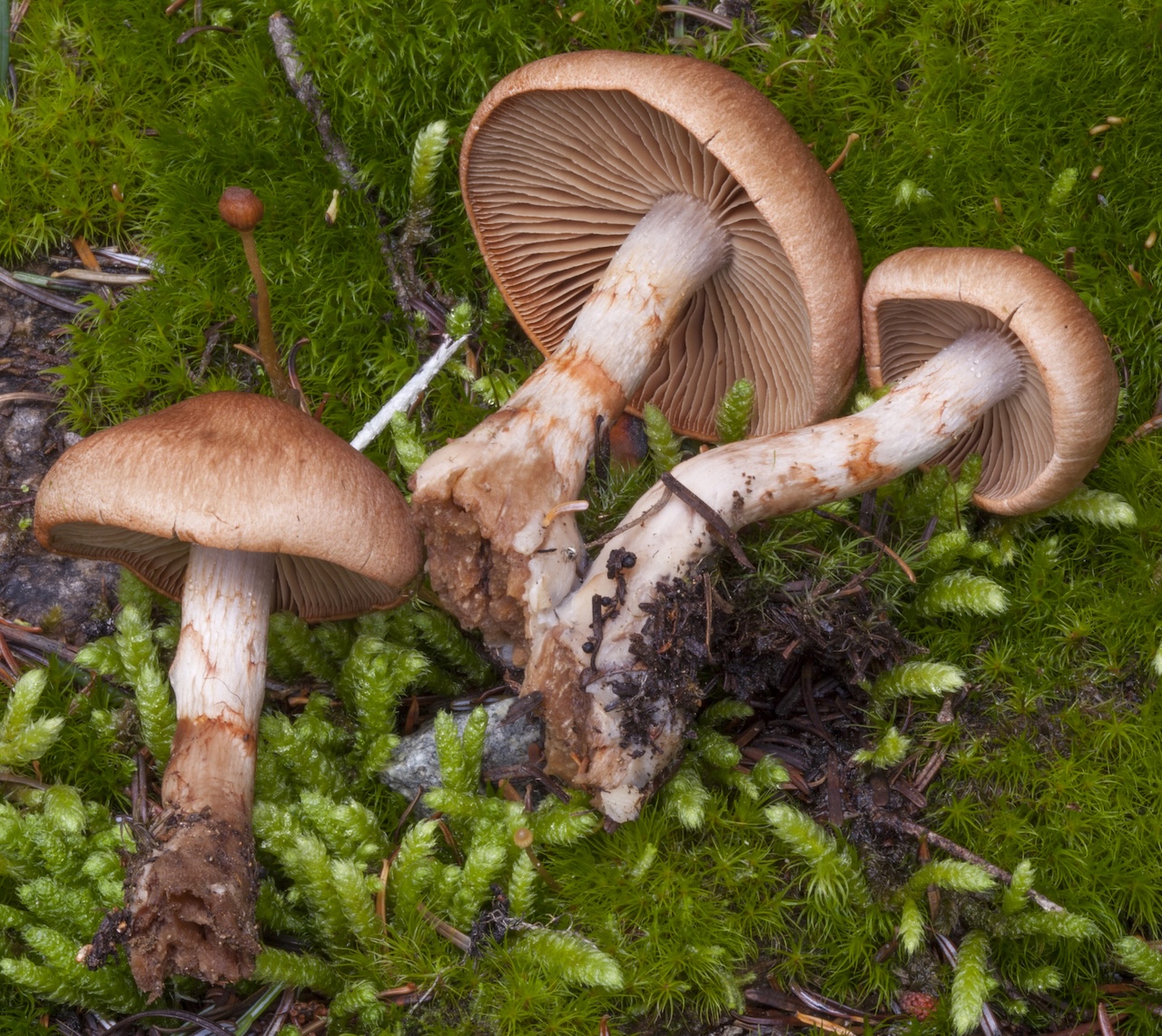
Cortinarius armillatus – Distinctive species with dry cap and stem and bright orange bands (remnants of the cortina and rusty brown spores) around the stem.
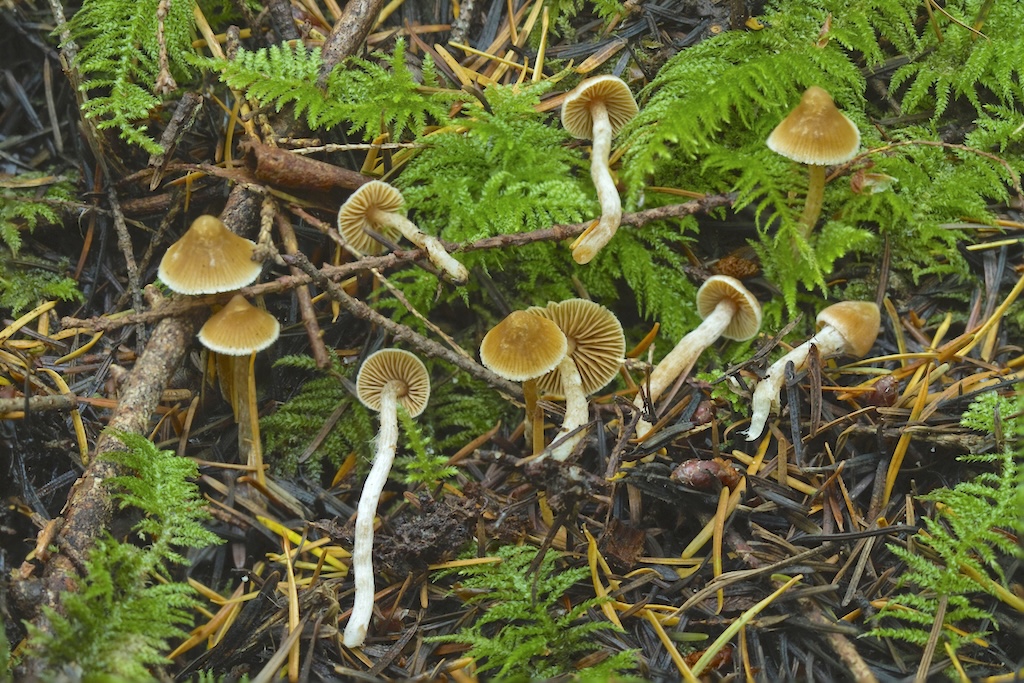
Cortinarius acutus – An unusually small species with cone-shaped caps that shows up occasionally in our Doug fir forests.
A very few Cortinarius are edible, but most should be avoided until one has a more educated feeling about mushroom differences. Some species’ groups within the genus have very toxic properties that, unfortunately, have caused deaths. The captions of the photos here should help you recognize the genus and perhaps a few of the many local species.
____________________________
From 1977 to 2009, Dr. Fred Rhoades was an instructor of biology at Western Washington University.