Beaks and Bills
by Joe Meche
For years, I’ve espoused the concept of birding in your backyard as an alternative to getting out of the house on miserable-weather days, or if you were housebound for one reason or another. This was, in fact, part of the idea behind the Great Backyard Bird Count, a joint venture of the National Audubon Society, the Cornell Laboratory of Ornithology, and Birds Canada. The count takes place in February and has become a worldwide sensation with more than a million birders participating in 216 countries and sub regions. The 2026 count identified and listed more than 8,000 species!
Counts like this are done in conjunction with the Audubon Society’s Christmas Bird Count and the counts on World Migratory Bird Day to monitor the populations of all bird species during different times of the year. These efforts are all conducted by citizen scientists and the combined results provide an accurate account of bird species that are in good condition as well as those that might be in decline.
I’ve always known there were birds in my own backyard, front yard and all around the neighborhood, and, though I never took it for granted, I was usually off birding someplace else. Recently, due to pre- and post-surgery and assorted misadventures, I stayed closer to the hearth and confined my birding to my deck, which has an expansive view of Bellingham Bay from Squalicum Harbor almost to Fairhaven. With a couple of scopes and binoculars, I can scan the close-in waters just off Boulevard Park and as far as the mouth of the Nooksack River. The large flocks of cormorants, scoters, goldeneyes, and even long-tailed ducks add a bit of spice to winter views.
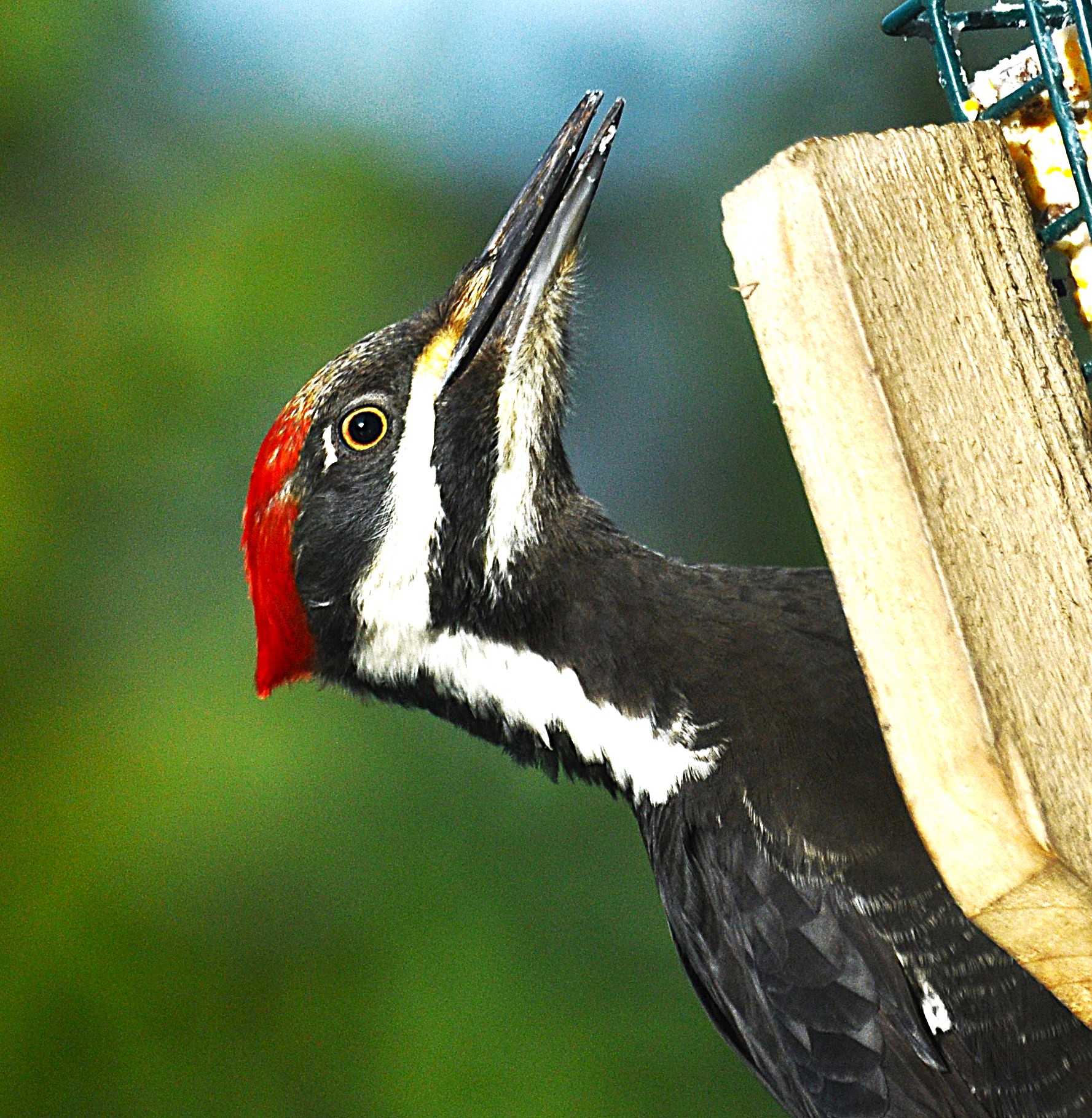
photo: Joe Meche
Pileated woodpecker
While these long distance views might add to a daily checklist, the best birds are the ones that are attracted to the bird-centric table I’ve intentionally set for them. From a variety of plants and feeders to attract hummingbirds to the suet baskets hanging off the deck and a fountain with a solar powered bubbler, it gets pretty busy. It’s especially busy during the nesting season. It goes without saying that this is a year-round activity that benefits the birds and entertains the inner birder. From the perspective of an entire year, I can see that my neighborhood on South Hill hosts a healthy and diverse population of birds, as well as a few mammals of note.
Just last year in a small park only two blocks away, a pair of great horned owls raised two owlets. I had been hearing the adults calling during the night, if I happened to be awake. After a short time, the calling was more frequent and often near sunset and sunrise. As the activity increased, I met a few of my neighbors in a small park I had never heard of before the owls showed me the way. I had occasion to walk down during the day after the owlets began to move about and I had a surprise visit with a bobcat. Seems that wilderness is close at hand.
In recent days, I’ve had the pleasure of watching two separate species introducing the young of the year to our suet feeder. Steller’s jays are nesting nearby and the adults arrive to wait for the fledglings to get close enough to observe the how-to. The young jays are far from adult plumage and kind of fluffy looking with their mostly-gray-turning-to-blue plumage. Their gapes are quite obvious as well. These are the soft parts at the base of their bills which will harden as they mature.
My favorite experience of the summer was what I refer to as a flicker family feeding frenzy. Two adult red-shafted flickers flew to the feeder and were followed in rather chaotic fashion by three fledglings. The young sat on the deck railing and on the suet support beam and waited to be fed. We viewed this from the dining table as we enjoyed our own meal … with live entertainment! Since the initial feeding and instructions, the young now come alone or with a sibling trying to learn the technique.
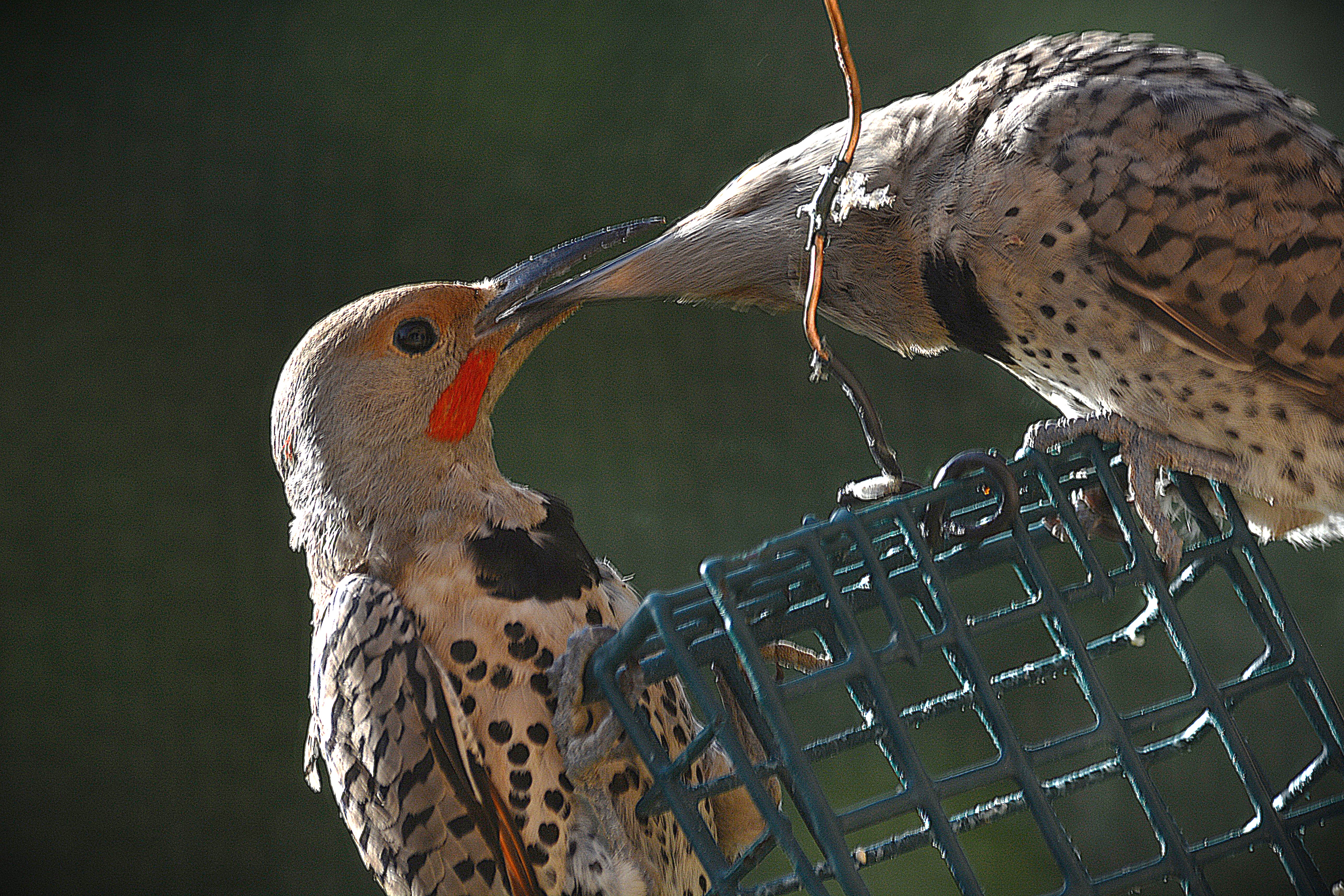
photo: Joe Meche
Adult northern flicker feeding juvenile
So far, we’ve had five species of woodpeckers stop by to visit. Aside from the flickers, both red-shafted and intergrade, we’ve hosted downy and hairy woodpeckers and red-breasted sapsuckers along with and the best of them all … the magnificent pileated woodpecker. These large birds often catch me off guard when they just swoop in out of nowhere for a share of the suet. Whatever I’m doing, I just have to stop and watch as they rule the suet block as long as they wish. The way they’re gorging themselves lately tells me they just might have nestlings to feed. I’ll look forward to seeing them any day now.
Both Anna’s and rufous hummingbirds are regular visitors to the feeder that hangs right outside my office window. The Anna’s is our year-round resident hummer while the rufous is migratory. The Anna’s is slightly larger but they give the overly-feisty rufous plenty of room. As hardy as the Anna’s might be, you would think it would be the other way around. A variety of flowering plants like salvia and crocosmia also attract these mini marvels.
It’s always interesting to watch the effect of the seasons on bushtits. During nesting season, pairs prefer to be alone as they build their intricate sock-like nests and raise their young. After all those chores are done and the young have fledged, they revert to their offseason mode of flocking together. I recently counted an even dozen on the suet feeder, coming and going in small to larger raiding parties. They seem to cluster in the shrubbery below the feeder and then rush in as one.
Like the rest of the neighborhood, we have more than our fair share of crows and ravens, and for the first time since we’ve been here … starlings and house sparrows. The smaller species more than make up for the occasional starling visits. In the course of the year, we’ve had two migratory species, the black-headed grosbeaks and western tanagers … both prize catches in my opinion. Just imagine how far they had to fly to get to our suet feeder. The variety of smaller passerine species include both black-capped and chestnut-backed chickadees, red-breasted nuthatches, ruby-crowned kinglets and varied thrushes which are real treats up close during the winter months. To add to the entertainment are the other birders that are attracted to the same small birds that I’m watching … though for different reasons. Merlins, sharpshinned and Cooper’s hawks swoop through now and then.
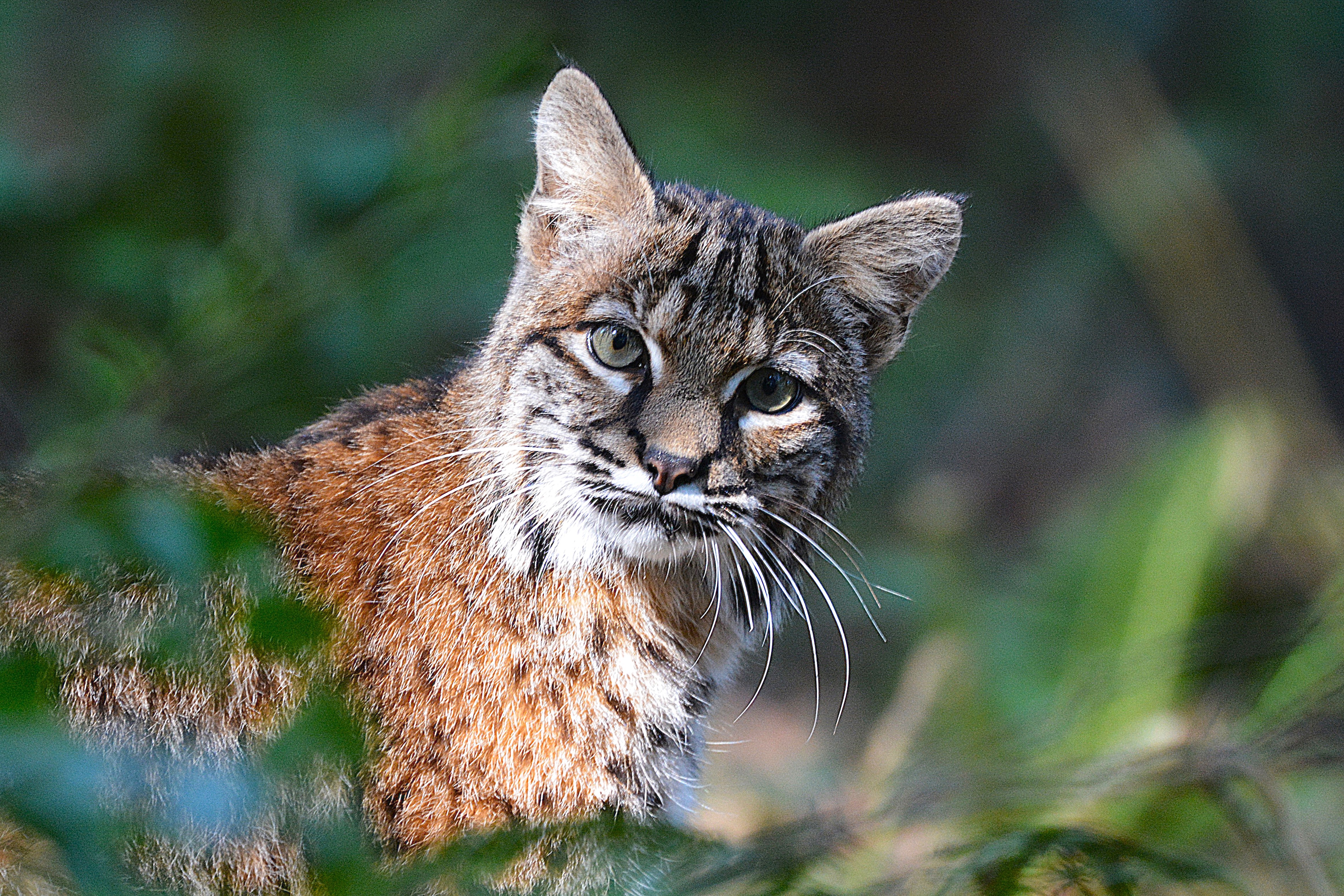
photo: Joe Meche
Lowell Park bobcat
Along the mammal front, along with the bobcat from Lowell Park, coyotes often stroll through the wooded areas along with deer and their fawns in spring. My best hands-down mammal sighting occurred during an early foggy morning when I was on my way to the bathroom. I had to do a double take as I passed my office window and saw a fat raccoon stretched to its full length to reach the hummingbird feeder. Raccoons visit occasionally and set off all the exterior light sensors as they plod along the length of the deck.
All in all, birding in the neighborhood and from the comfort of your own home isn’t altogether dull. I’ve had to rotate hummingbird feeders during the colder months and even shovel a little snow to get to the other feeders, but, if you’re a birdbrain like me, home is just another place to pursue our shared passion.
_______________________________
Joe Meche is a past president of the North Cascades Audubon Society and was a member of the board of directors for 20 years. He has been watching birds for more than 70 years and photographing birds and landscapes for more than 50 years. He has written over 250 columns for Whatcom Watch.