Native Plant Neighbors
by Eric Worden
We have all heard the saying, “Don’t judge a book by its cover.” We have all ignored that saying. There is another more pointed tale from the same vein:
A man met another, who was handsome, intelligent, and elegant. He asked him who he was. The other said: “I am the Devil.”
“But you cannot be,” said the first man, “for the devil is evil and ugly.” “My friend,” said Satan, “you have been listening to my detractors.” *
I recalled this tale one day in my weedy garden while idly regarding a patch of Geum macrophyllum, the “large-leaved avens.” It’s a boring plant with a boring name. It’s in the rose family, but hardly rose-like. In general appearance, it’s unremarkable and weedy, often falling ignored by the trailside with others like nipplewort and buttercup. It is pollinated by small flies. Its fruits are burrs that stick in your socks.
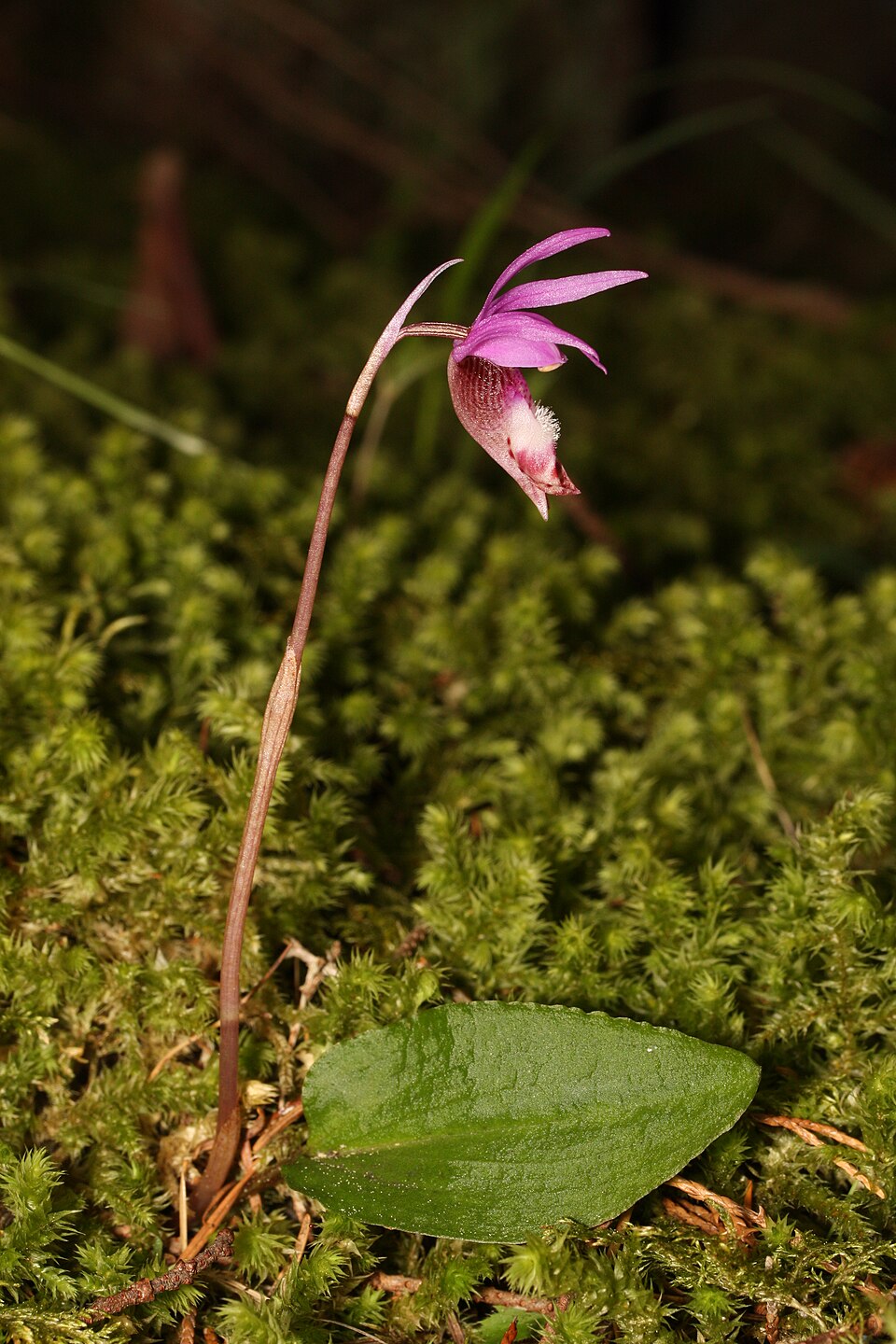
photo: Walter Siegmund, CC BY-SA 3.0, via Wikimedia Commons
The calypso orchid.
On that day in the garden, I pined for my sweeter recent memory of a calypso orchid, Calypso bulbosa, seen while on the trail. This beautiful orchid, reminiscent of a fairy’s slipper: how elegant, how delicate, how intricate, how exciting! In Greek mythology, Calypso was a nymph, her name meaning, “she who conceals.” In the Odyssey, she detained Odysseus by force for seven years on her island, beguiling him with sweet words and songs. The plant, like most orchid species, attracts bees with colors and sweet odors but provides no nectar. Neither does it provide the bumble bee with any pollen: that gets cleverly stuck on the bee’s back in a little package and couriered to the next calypso flower. The plant is tiny, has only one or two leaves, and absolutely depends on soil fungi from which it extracts carbohydrates for energy. Are your feelings about this orchid different at the end of this paragraph than they were at the beginning?
Large-leaved avens is abundant and feeds wildlife; well, at the very least, it feeds soil creatures after it dies.
Which Plant Passes Judgement?
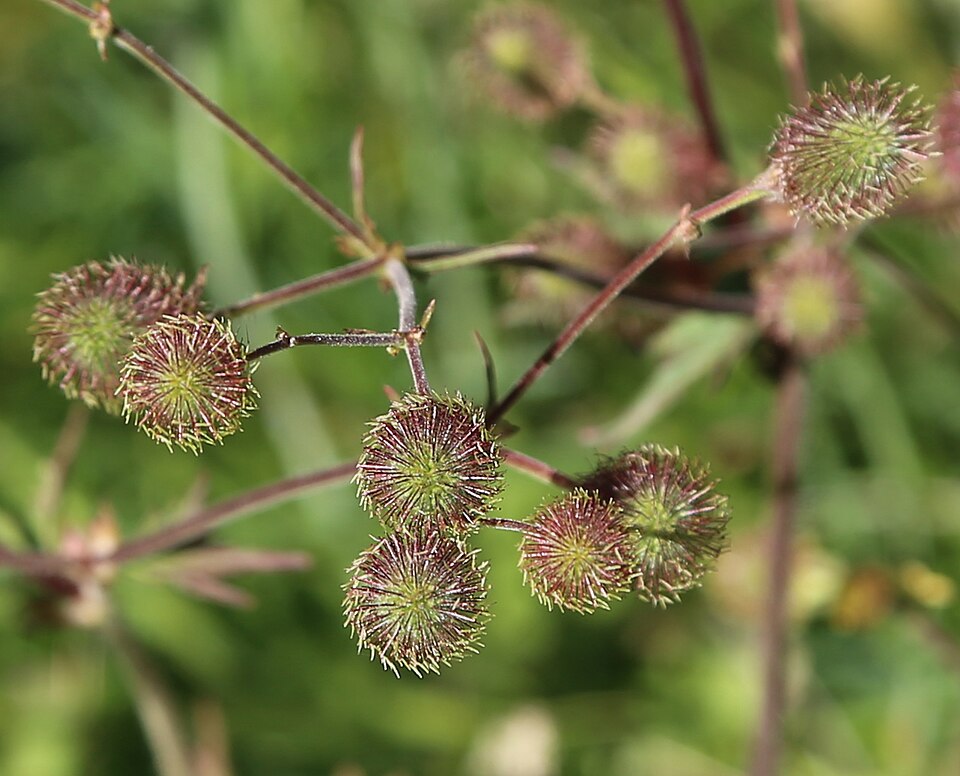
photo: Dcrjsr, CC BY 4.0, via Wikimedia Commons
Velcro-like seed heads of large-leaved avens.
Least or most? Friendly or not friendly? Beautiful or drab? At the end of this trial, which plant passes judgement, and which is rejected? The author I quoted before offers another point for reflection: “Why do you like me?”
Unless you are an enlightened saint, at this point you may feel confused or at least conflicted. We are all in the habit of liking and disliking things, and judging them by various value systems, and sometimes this leads to internal (not to mention interpersonal) conflict. In past Whatcom Watch columns, I leaned heavily on this habit, adjuring readers to value certain plants (Oregon grape, osoberry, red alder) that are often unvalued. I praised those plants’ contribution to ecosystem function, their usefulness to people, their vigor, their idiosyncratic uniqueness, their aesthetic beauty. My aim was practical: to improve the health of Earth’s natural systems, and human health, by increasing people’s appreciation of those common plants. But the road to hell is paved with good intentions, directed by arbitrary value systems. So from this point on, I’ll try a new approach: describing the plants without judgement and without trying to convince you of anything.
These two plants — the large leaved avens and the calypso orchid — are quite different from each other and are not closely related. Their common ancestor — an early dicot — lived over 130 million years ago. For comparison, the final dinosaur extinction occurred 66 million years ago, and the human species originated about 0.3 million years ago. The large-leaved avens is closely related to roses, apples, and strawberries. The calypso orchid is closely related to other orchids, and less related to various lilies. The two plants are both small, herbaceous, short-lived perennials, but beyond that they are so different that it’s difficult to compare them.
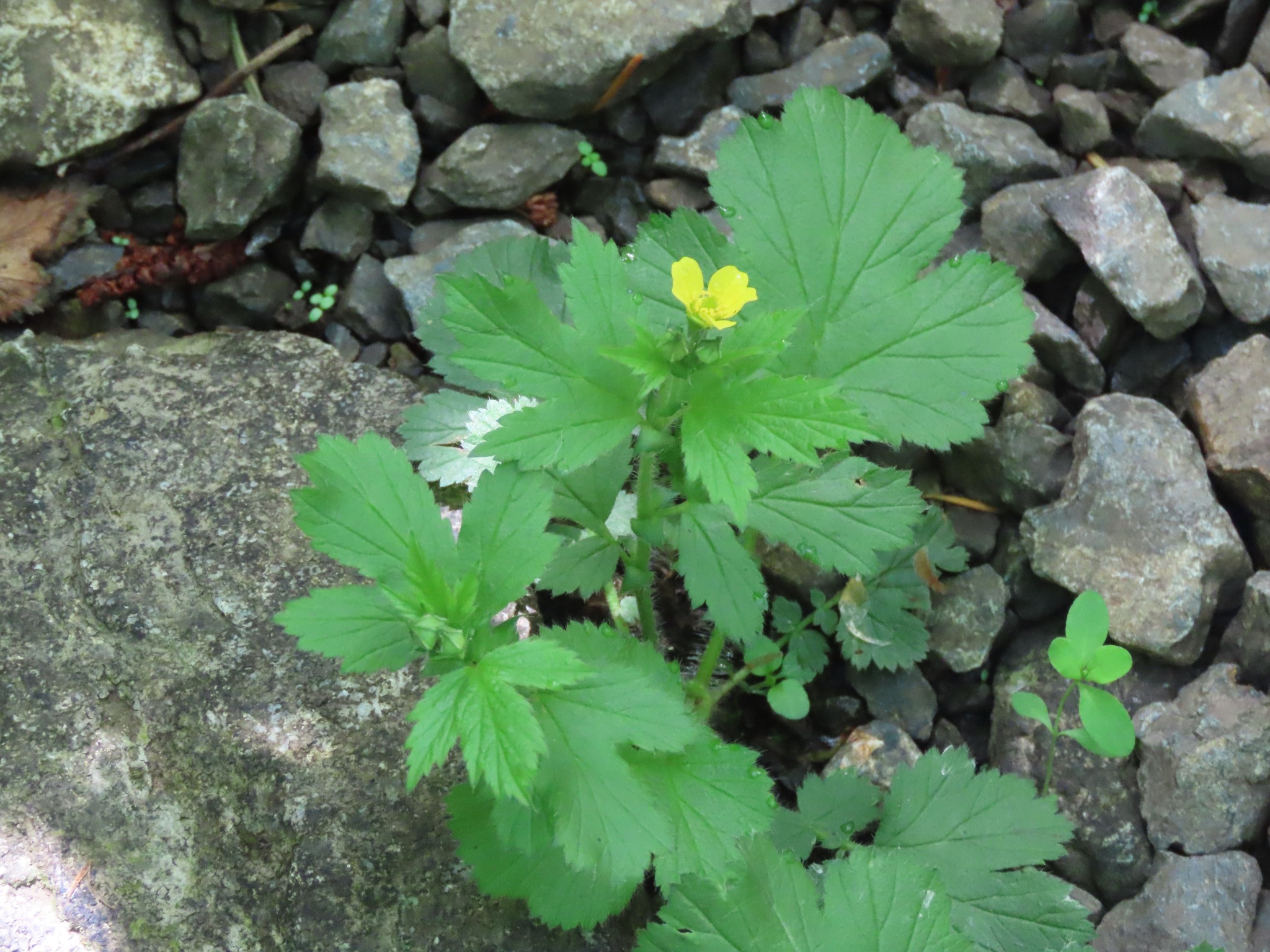
photo: Erin Springinotic, Public Domain
The large-leaved avens.
Ordinary Large-Leaved Avens
The large-leaved avens is ordinary in many ways, but it has a few notable features. Like the name says, the leaves are large for a small plant; they are irregularly lobed and serrated, with the largest lobe growing at the end of the leaf. Overall, the leaves resemble some lobed varieties of kale. The small five-petaled flowers are all yellow to human eyes, but to insect eyes which also see ultraviolet, the flower has a dark center; this is a common feature of many other unrelated small yellow flowers, and seems to attract small pollinating flies. Additionally, like all rose-family flowers, these have numerous thread-like styles (the female parts), but, uniquely for this species, each style ends in a hook: one such hook hardens and persists on each seed, giving it a Velcro-like ability to stick to hair or clothing, and be carried away to new fertile ground.
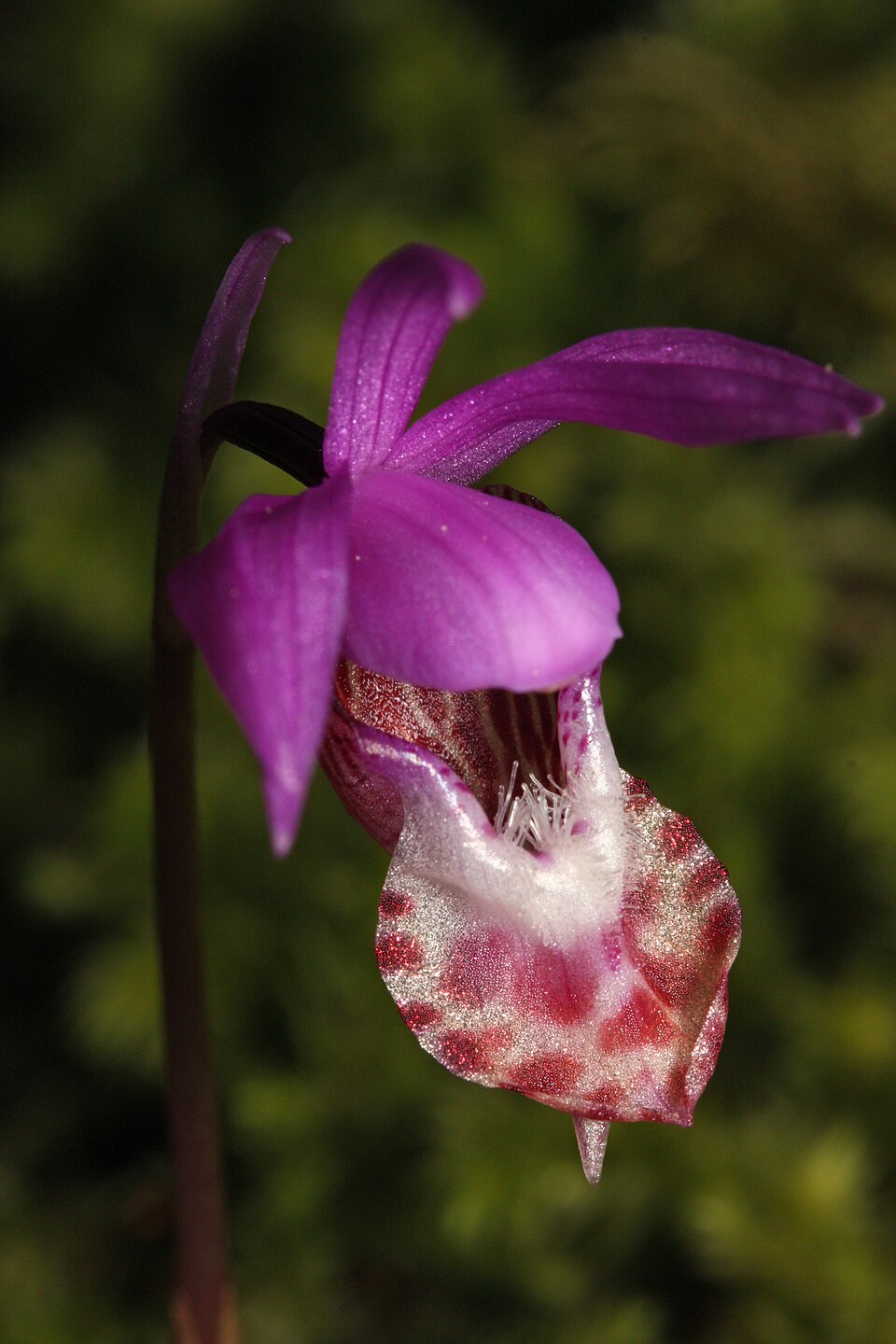
photo: Walter Siegmund, CC BY-SA 3.0, via Wikimedia Commons
The calypso orchid is also known as the “fairy slipper.”
Calypso Orchid’s Pink Flower
For the calypso orchid, its key attention-grabbing feature is its pink flower that resembles a tiny fairy’s slipper. Did you know that among all mammals, only primates (including humans) can perceive the colors orange and red distinctly from the color green? However, human enjoyment of this flower’s color and shape is irrelevant to the plant. The color is a signal that attracts bees. The shape is perfectly formed for precisely positioning a bumble bee to receive the hitchhiking pollen packet, mentioned earlier. Unlike the large-leaved avens which has ordinary roots, this orchid produces a small egg shaped corm each year to store energy for the following spring. Perhaps the most unique, little known, and unintuitive feature of this orchid — like almost all orchids — is its dust-like seed. Unlike the seeds of other plants, it contains a microscopic plant embryo only, and no stored carbohydrate energy or proteins, i.e., it lacks endosperm. The tiny embryo can only begin to grow when the microscopic thread (hypha) of a specific soil fungus connects to it and transfers these essential materials.
To learn more about these and other native plants, visit the Washington Native Plant Society at wnps.org.
*[literary reference] Idries Shah, “Reflections”
A shorter version of this article was published in the June 2024 newsletter of the Koma Kulshan chapter of the Washington Native Plant Society.
_______________________________
Eric Worden is a lifelong amateur naturalist and the chair of the Koma Kulshan chapter of the Washington Native Plant Society.