Native Plant Neighbors
by Eric Worden
Our winter weather in Whatcom county is generally dismal: featureless dark gray skies, weeks of monotonous drizzle, chilling winds, sunshine forgotten. It affects me and many other people physically: by early February, I sometimes feel grim desperation. However, we stay here because in spring and summer we are rewarded.
In early March, nature finally shows us a sign and promise of renewal: for Noah, it was a rainbow — for us, it is the flowering of the osoberry bush. In our area, of all of the thousands of species of plants, it is the first one to bloom abundantly in the spring.
Osoberry is common shrub; even within urban areas, it’s found on forgotten roadsides, in empty forested lots, and even emerging through blackberry thickets. It’s common throughout the mild-climate, near-coastal forests of Washington and Oregon. In early spring, the 10- or 15-foot-tall plants are generously sprinkled with pendulous clusters of white flowers and fresh green leaves that cheer up a landscape still otherwise dominated by barren twigs.
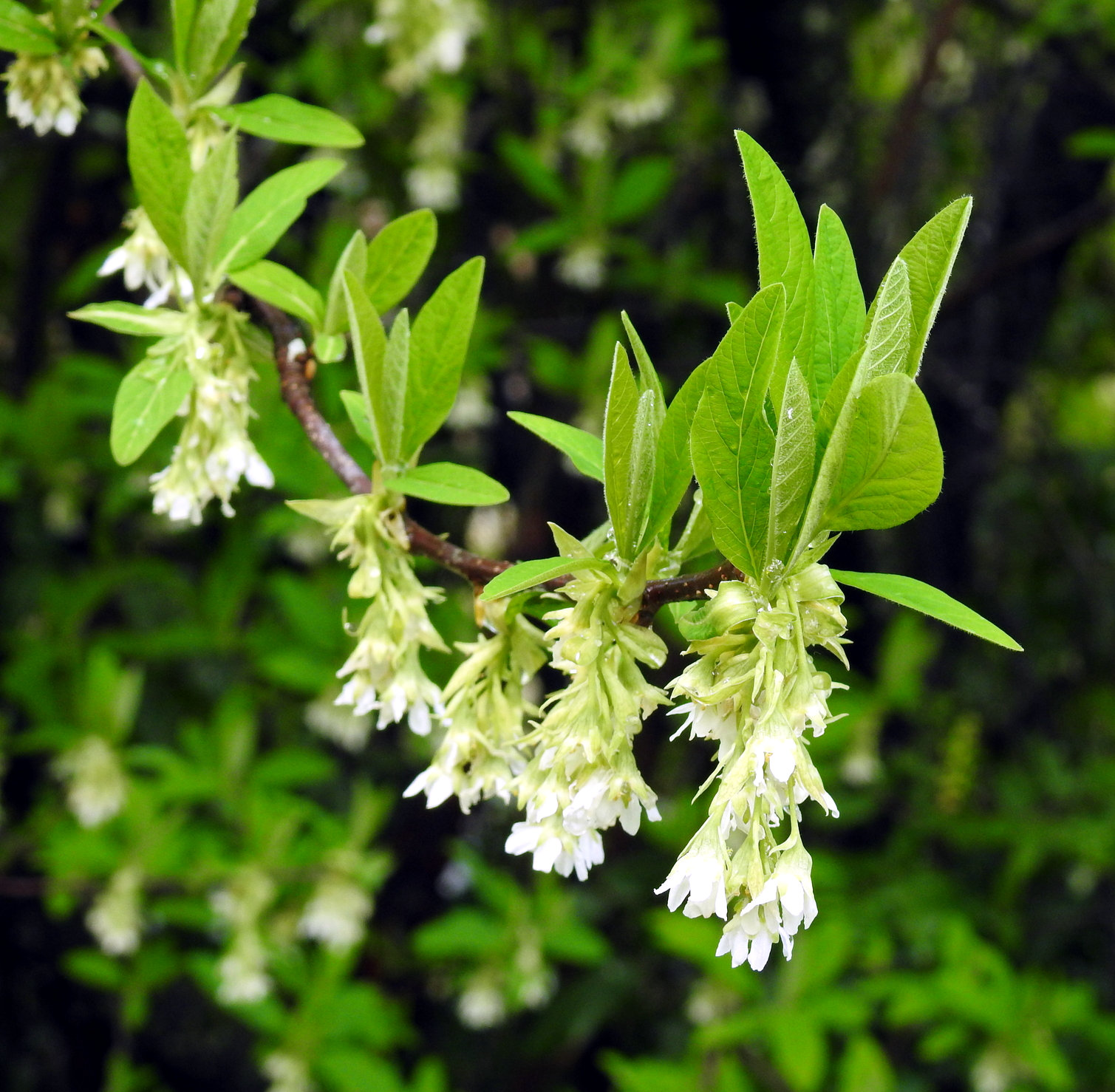
credit: Neil Shepherd CC BY-NC
Delicate early spring blooms and leaf shoots of an osoberry plant.
White, Dangling Flowers
The osoberry is relatively subtle though, and many people never notice it. We live in a world lit up with dazzling LED screens, and horticultural plants are also bred to be bright and dazzling. Who notices white flowers? If you haven’t yet, try it! The form of the shrub is also subtle. In quiet shady places, it naturally adopts an open, elegant habit. Its soft leaves grow in simple oval or lance-like shapes, though never particularly uniform in shape or arrangement.
A brief aside about the name: osoberry is also called Indian plum. But many people — including me — feel that an English language name starting with the word “Indian” is too incongruous and presumptuous. By comparison, consider that in England, what we call “English ivy” is called simply “ivy.” “Oso” is Spanish for bear, recognizing that bears relish the fruits.
For me, the beauty of osoberry is its calming, simple elegance, its freshness, and its ease in the landscape. With no tending, pruning, or care of any kind, this plant will gracefully occupy a shady corner of any garden. By freshness, I refer to its spring flowers and bunches of tender, luminous green leaf shoots, and also the taste of its leaves which is quite similar to cucumber! What is fresher than the smell of cucumber, mixed in tzatziki, or scented soaps, face creams, or even sliced and laid directly on the face?
This spring, try plucking a fresh green leaf of osoberry and gently bite it and rest it on your tongue. You will taste cucumber. It turns out that most browsing animals don’t like cucumber flavor, making this a defensive characteristic.
Osoberry “Plums”
The “plums” of osoberry are unique in our forests. When fully ripe, they look just like miniature purple Italian plums, half an inch long, and include a relatively large pit. I enjoy eating them, but I’m alone among my friends in that way; though they have a pleasing texture and sweetness, most people find the bitter cucumber flavor too strong. Remember though, many of the fruits that we eat were bred over centuries from small, seedy, bitter ancestors. In the hands of visionary plant breeders, could the humble osoberry evolve into a large, sweet, delicious — yet mildly cucumber-y — plum or mango?
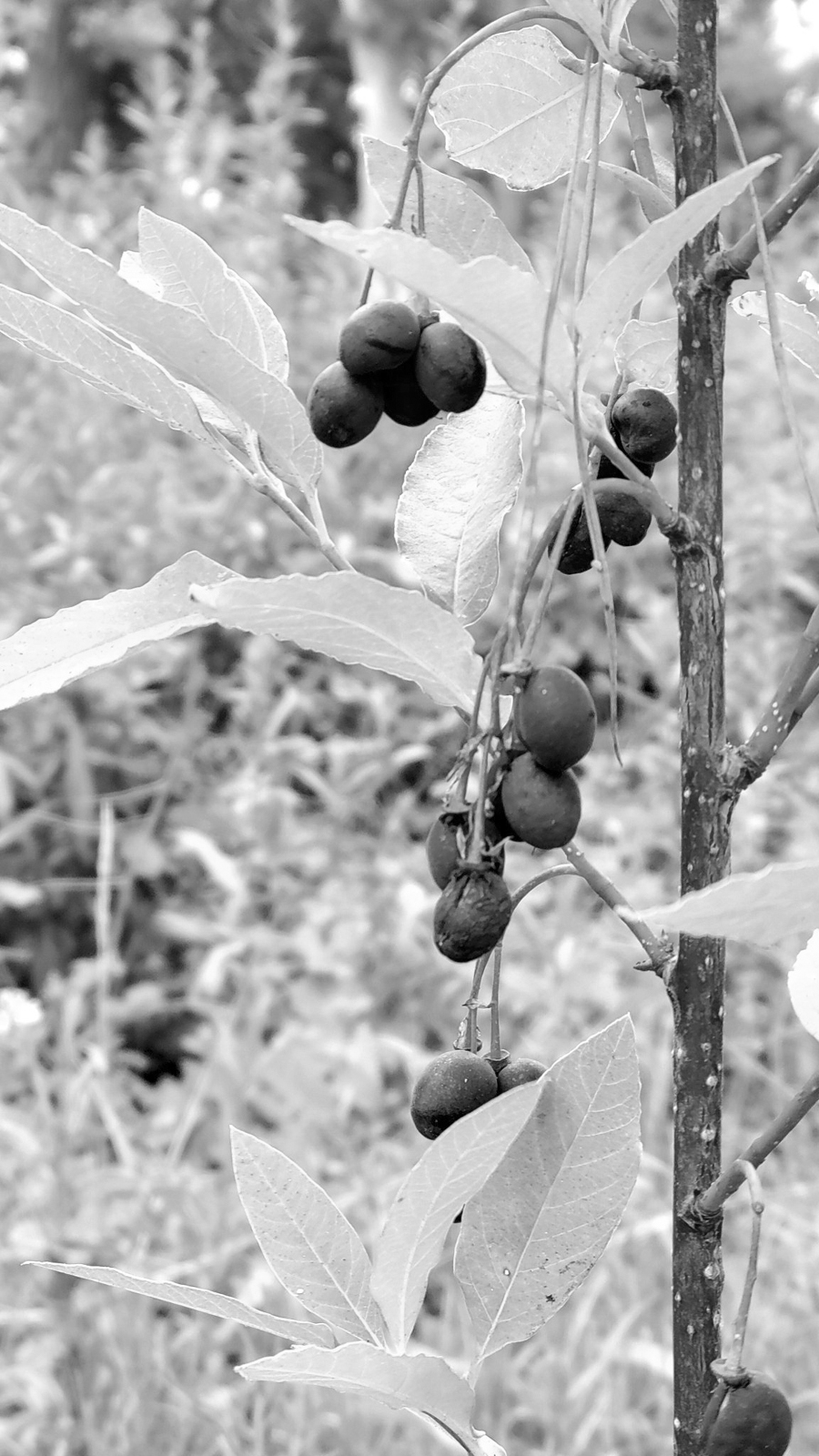
credit: yerbasanta via iNaturalist CC BY-NC
Fully ripe osoberry fruits are nearly black.
In the meantime, osoberry fruits are popular with wildlife. Bears and raccoons enjoy them, but only if they can get them before the birds. Every year in my garden, with great commotion, American robins strip the bushes clean while the fruits are still hard, orange, and lacking any sweetness.
Osoberry is part of large family of closely related plants that includes roses, apples, hawthorns, cherries, blackberries, and strawberries. Somewhat unique in that family — called Rosaceae, the rose family — each osoberry plant is entirely only male or female. This differs from most other rose family plants, which have male and female parts combined in each flower. This characteristic, called dioecy, prevents individuals from inbreeding with themselves, potentially improving genetic adaptation and evolution of the species over time.
Rose Family
It seems to have had this effect on osoberry, which is unusual among all the 5,000 Rosaceae species in producing multiple plums from each flower: one for each ovary. In our area at least, osoberry is also unique for its cucumber flavor and for being the most shade tolerant of the rose family plants. Genetically, it has no other close cousins (co-generic species) in the rose family.
Returning our attention to the early spring … during that time, or even during winter, while outside, were you ever surprised by the sight of a very large bumblebee buzzing around? That was a lone queen bumblebee interrupting or ending its winter slumber. Those queens overwinter in subterranean mouse holes, and, when they finally emerge, they are hungry and need energy. The early spring osoberry flowers are important for these bees’ survival. In turn, the osoberry depends on the bees for pollination. Remember, unlike many other plants, self-pollination is impossible for the osoberry.
Also in early March, have you ever seen a deer? That’s a joke for Whatcom County residents … Well, you might have noticed that deer are also very hungry in the early spring. Though the cucumber-y osoberry leaves are not their favorite during the summer, they are important forage for deer in the early spring. For your own part, on the next sunny break between rains, I encourage you to turn your eyes away from your busy life, the busy road, or the busy trail, to the side, where you may see the quiet osoberry that has been growing all the while.
_______________________________
Eric Worden is a lifelong amateur naturalist, and the chair of the Koma Kulshan chapter of the Washington Native Plant Society.